
Why a Budget Planner Notebook Beats Digital Apps
In a world dominated by “there’s an app for that,” you might wonder why anyone still reaches for a pen and paper. But when it comes to your hard-earned cash, the tactile nature of a budget planner notebook offers advantages that a screen simply cannot replicate.
First, there is the concept of tactile accountability. Research suggests that physically writing down your expenses creates a stronger mental connection to your financial habits. When you manually record a $5.00 latte or a $50.00 impulse buy at the checkout line, your brain processes that transaction more deeply than it does when an app automatically syncs your bank data. This leads to increased spending mindfulness, helping you pause before the next purchase.
Furthermore, using a physical notebook provides a level of financial security that digital tools lack. There are no passwords to be hacked, no data for tech companies to sell, and no “subscription fatigue” from monthly app fees. It is a private, secure space for your goals.
Beyond security, paper planners are incredible for stress reduction. Checking a banking app can often feel like a jump-scare. Conversely, sitting down with a beautifully designed notebook turns budgeting into a ritual rather than a chore. It allows for intentional habits, where you can see your progress in your own handwriting. For those looking for more simple tools for budget management, the humble notebook remains the undisputed king of clarity.
Key Features of a High-Quality Budget Planner Notebook
Not all notebooks are created equal. If you are going to carry this book for a year, it needs to be durable and functional. Here is what we recommend looking for:
| Feature | What to Look For | Why It Matters |
|---|---|---|
| Binding Type | Spiral, Disc, or Hardcover | Spiral lays flat; Disc allows you to add/remove pages; Hardcover is most durable for bags. |
| Paper Weight | 100lb to 120gsm | Prevents ink from bleeding through to the other side of the page. |
| Layout | Undated vs. Dated | Undated planners allow you to start any time without wasting pages. |
| Organization | Pockets & Tabs | Essential for storing receipts, bills, and navigating quickly between months. |
| Extras | Stickers & Envelopes | Stickers make tracking “fun”; envelopes are vital for cash-stuffing methods. |
A high-quality budget planner notebook should also include specialized sections. Look for dedicated bill trackers so you never miss a due date, debt payoff logs to visualize your journey to zero, and savings goal trackers to keep you motivated for that dream vacation or emergency fund. Some premium options, like those from Colibri Paper Co., even offer personalization, allowing you to put your name on the cover for that extra sense of ownership.
Top 10 Budget Planner Notebook Options for Financial Freedom

Finding the right tool is half the battle. Based on market data, customer reviews, and ease of use, here are the top 10 options currently helping users master their money.
1. Clever Fox Budget Book 2.0
This is a powerhouse for anyone serious about their finances. It is compact (smaller than A5) but packed with 10 pages of tracking per month. It includes a user manual with examples, 146 stickers, and a 60-day satisfaction guarantee. With a 4.6-star rating from over 3,400 reviews, it’s a proven winner for mastering spending and investing. Budget Book 2.0 – Master Spending, Saving & Investing – Clever Fox®
2. Sooez Budget Binder
If you are a fan of the “cash envelope” system, this is your best bet. It features a 4.6-star rating from a staggering 14,682 reviews. It is less of a traditional notebook and more of an organizational system with clear pockets for cash stuffing, making it perfect for those who want to physically separate their spending categories.
3. Budget Planner – Monthly Finance Organizer
A consistent bestseller on Amazon, this organizer boasts a 4.6-star rating from over 5,500 users. It is praised for its durability and comprehensive monthly spreads. It’s an excellent middle-ground option for those who want a sturdy, professional-looking book without a high price tag.
4. SUNEE Budget Planner
Newer to the scene but highly rated (4.8 stars), this planner is gaining traction for its clean design. It’s specifically marketed toward beginners who might feel overwhelmed by too many complex charts. It focuses on the essentials: income, expenses, and what’s left over.
5. Easy to Use Monthly Budget Planner
Simplicity is the soul of this notebook. With 4.5 stars and 3,001 reviews, it’s designed for the person who wants to spend five minutes a day tracking, not an hour. It’s lightweight and fits easily into a backpack or purse.
6. Erin Condren A5 Budget Planner
For those who value aesthetics as much as utility, this A5-sized planner is a dream. It features 80lb text weight paper (very thick!) and 13 tabs for easy navigation. It’s customizable, allowing you to upload photos for the cover, and includes quarterly financial check-ins to help you see the “big picture.” Asterisk A5 Budget Planner | Erin Condren
7. Colibri Paper Co. Budget Planner
If you want something handcrafted in the USA, this is it. Using ultra-thick 100lb Mohawk Fine Paper and aluminum coils, these are built to last. They include sections for travel budgeting and gift tracking, which are often overlooked in standard planners. Budget Planner & Budget Tracker Journal | Personalized – Colibri Paper Co
8. May Designs Budget Planner
Perfect for the “journal lover,” this notebook features beautiful patterns and can be personalized with your initials or logo. It’s an 80-page book that includes charitable giving trackers and year-at-a-glance budgeting. It’s stylish enough to carry to a coffee shop without it looking like a “math book.” Budget Planner – May Designs
9. A5 Paper Inserts Budget Planner
For those who already own a favorite binder (like a Filofax or similar A5 system), these inserts are the way to go. They offer 308 pages of tracking, including net worth trackers and sinking fund summaries for up to 40 categories. It’s the ultimate “build-your-own” financial tool. Budget Planner (A5 Paper Inserts) – Missy Money
10. Budget Planner Notebook by Teresa Rother
This paperback option is a straightforward, no-nonsense tool. It provides a Monday-Sunday weekly expense tracker alongside monthly summaries. It’s a great choice for students or newlyweds who need a simple, physical record of where the money is going. Budget Planner Notebook: Monthly And Weekly Expense Tracker, Personal Finance, Bill Organizer, Budget Management (Paperback) | Harvard Book Store
Choosing the Best Budget Planner Notebook for Your Goals
When selecting your budget planner notebook, consider your specific “money personality.”
- The Artist: Go for May Designs or Erin Condren for customization.
- The Optimizer: Choose Clever Fox for the detailed investing and goal-setting pages.
- The Cash-Only Spender: The Sooez Budget Binder or Missy Money inserts are your best friends.
- The Minimalist: SUNEE or the ZICOTO “Easy to Use” planners will keep things simple.
How to Use Your Planner for Maximum Success
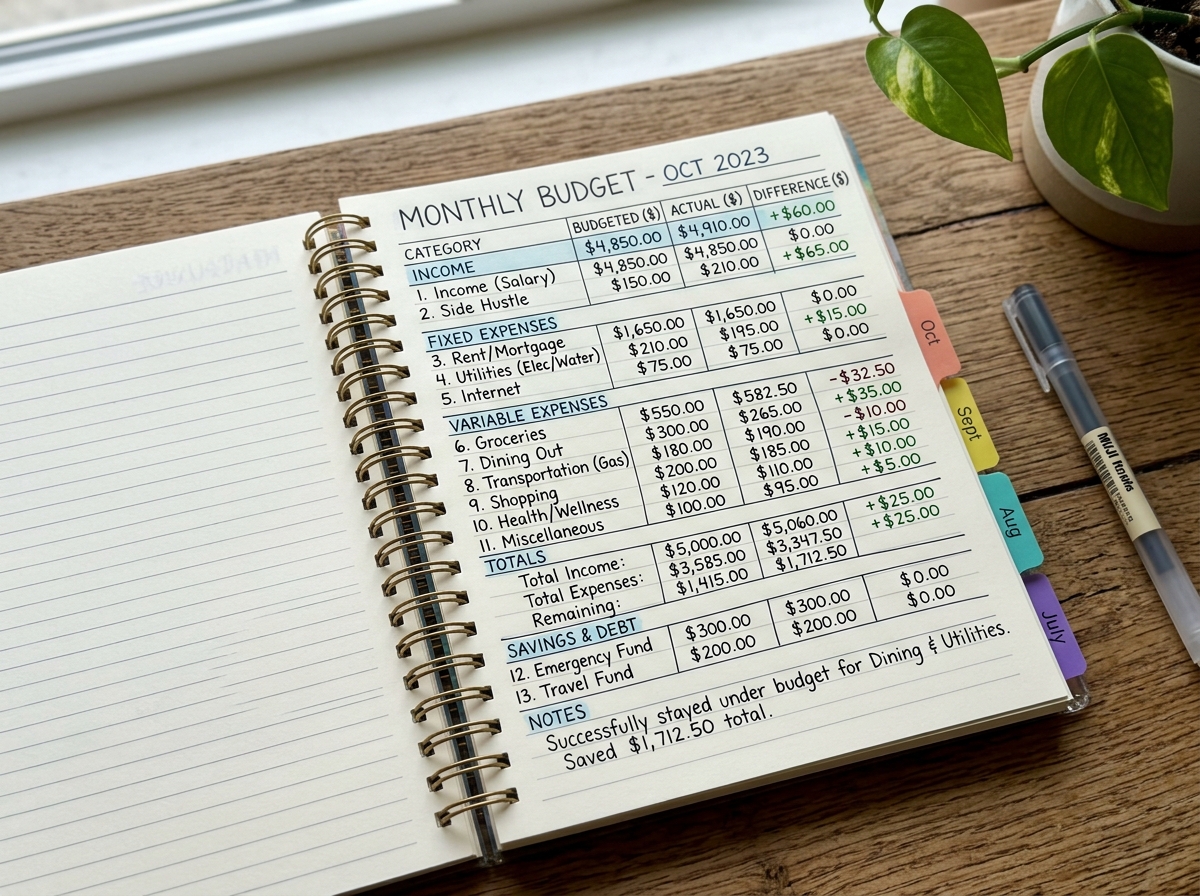
Buying the notebook is the easy part; using it consistently is where the magic happens. To get the most out of your budget planner notebook, we suggest a tiered approach to your “money minutes.”
- The Monthly Setup: Before the month begins, list your expected income and fixed expenses (rent, insurance, Netflix). This is the time to set a “No-Spend Challenge” or a savings goal.
- The Weekly Check-in: Spend 15–20 minutes every Sunday reviewing your receipts and bank statements. Categorize your variable spending (groceries, dining out, gas). This prevents “end-of-month shock.”
- The Monthly Review: At the end of the month, compare your “Budgeted” vs. “Actual” amounts. Don’t be hard on yourself if you went over—use that data to make a more realistic plan for next month.
For those just starting out, we have a great guide on easy budget planners for beginners to help you navigate those first few pages. If you want to ensure every single dollar has a job, consider zero-based budgeting for beginners, a method that works perfectly with the Clever Fox or Erin Condren layouts.
Tips for Starting Your First Budget Planner Notebook
- Gather your data: You can’t plan if you don’t know where you’re starting. Collect one month of bank statements.
- Identify “Sinking Funds”: These are small amounts you save monthly for big annual expenses, like car registration or Christmas gifts. Many planners, like the Missy Money inserts, have dedicated sections for this.
- Include “Fun Money”: A sustainable budget plan must include room for joy. If you restrict yourself too much, you’ll abandon the notebook by month two.
- Use Color: Grab some highlighters! Color-coding your spending (e.g., green for bills, red for “oops” purchases) makes the data much easier to digest at a glance. Check out our weekly budgeting tips for beginners for more ways to stay organized.
Frequently Asked Questions about Budgeting Notebooks
Should I choose a dated or undated budget planner?
We almost always recommend undated planners for beginners. Life happens. If you miss a month or start your journey in the middle of July, an undated budget planner notebook ensures you don’t waste a single page. It provides the flexibility to pause and restart without the guilt of blank dated pages.
How much do high-quality budget planners typically cost?
You can find basic but effective budget notebooks on Amazon for as low as $5.00 to $12.00. Premium, handcrafted, or highly customizable options like Clever Fox PRO or Erin Condren typically range from $20.00 to $35.00. Considering a single overdraft fee can cost $35, a high-quality planner often pays for itself within the first month. Keep an eye out for promotions; brands like Happy Planner often offer tiered discounts (up to 25% off) when you spend over a certain amount.
Can I use a budget notebook for a small business?
Absolutely. Many freelancers and small business owners use budget notebooks to track income streams and deductible expenses. However, if your business has high transaction volumes, look for a “Large” or “PRO” version with extra “Expense Tracker” pages to ensure you have enough room for daily entries.
Conclusion
At QuickFinHub, we know that navigating your 20s is as much about managing your mindset as it is about managing your money. Financial freedom isn’t about having a million dollars; it’s about knowing exactly where every one of your dollars is going.
Whether you choose a sleek, personalized budget planner notebook or a simple spiral-bound book from Amazon, the act of taking control is what matters. By moving away from the “out of sight, out of mind” nature of apps and embracing the intentionality of paper, you are setting yourself up for a lifetime of financial confidence.
Ready to stop wondering where your money went and start telling it where to go? Start your journey to financial freedom today and explore our other resources for young adults navigating life’s big transitions.
