
You Don’t Need Much to Start Building Wealth
How to make money investing small amounts is simpler than most people think. Here’s a quick-start answer:
The fastest ways to start investing with small amounts:
- Open a micro-investing app (like Acorns or similar) and invest your spare change automatically
- Contribute to your employer’s 401(k) — even 1-2% of your paycheck, especially if there’s a match
- Open a Roth IRA and contribute whatever you can, up to the annual limit
- Buy fractional shares of index funds or ETFs through a commission-free broker
- Set up automatic recurring deposits — even $10 or $25 per week adds up fast
The single most important rule: start now, not later.
Most people believe investing is something you do once you have “enough” money. That’s one of the most expensive myths in personal finance.
Here’s the reality: investing just $20 per month can grow to more than $7,000 over 15 years — even at modest returns. And $100 per month, invested consistently at an 8% average return, could become roughly $140,000 over 30 years.
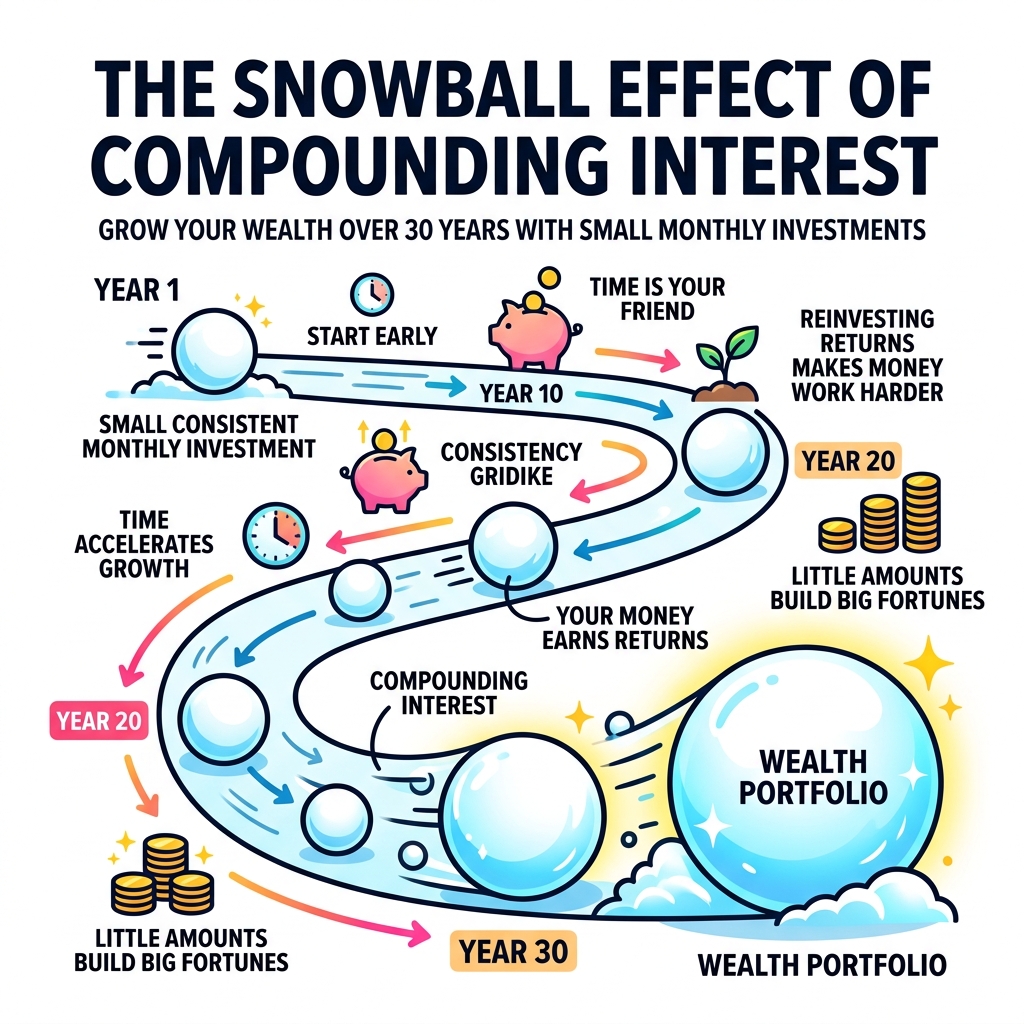
That’s not magic. That’s compound interest — your returns earning their own returns, quietly snowballing over time.
The earlier you start, the harder that snowball works for you. A 34-year-old delivery driver who started putting away just $25 a month into a low-cost index fund saw real, steady progress — and increased contributions after a raise. No financial degree required. No big starting balance. Just a habit and a little consistency.
This guide walks you through exactly how to do the same — from setting up your financial foundation to picking the right accounts and strategies for your budget.
Preparing Your Finances: The Foundation for Investing Small Amounts
Before we start picking stocks or funds, we need to make sure our financial house isn’t built on sand. Many of us feel the “pinch” of financial scarcity, which can actually make it harder to make long-term decisions. Scientific research on the psychological impact of financial scarcity shows that when we are stressed about money, our “mental bandwidth” decreases, making us more prone to short-term thinking.
To combat this, we recommend a “safety first” approach. This is the secret to how to invest without stress.
The Emergency Fund: Your Financial Shield
We suggest building a small “starter” emergency fund of one to two months’ worth of expenses before you go all-in on the stock market. Ideally, you eventually want three to six months of living expenses tucked away. Why? Because if your car breaks down and you have to sell your investments during a market dip to pay for repairs, you’ve lost money. Keep this cash in a High-Yield Savings Account (HYSA). These accounts often pay significantly more interest than standard brick-and-mortar bank accounts, keeping your “parked” money safe and accessible.
Taming the Debt Dragon
Should you pay off debt before investing? It depends on the interest rate. If you have credit card debt at 20% interest, paying that off is a guaranteed 20% “return” on your money. No investment can reliably beat that. However, if you have low-interest debt (like a student loan at 4%), you can often start investing with small amounts while simultaneously paying down the balance.
The 50/30/20 Rule
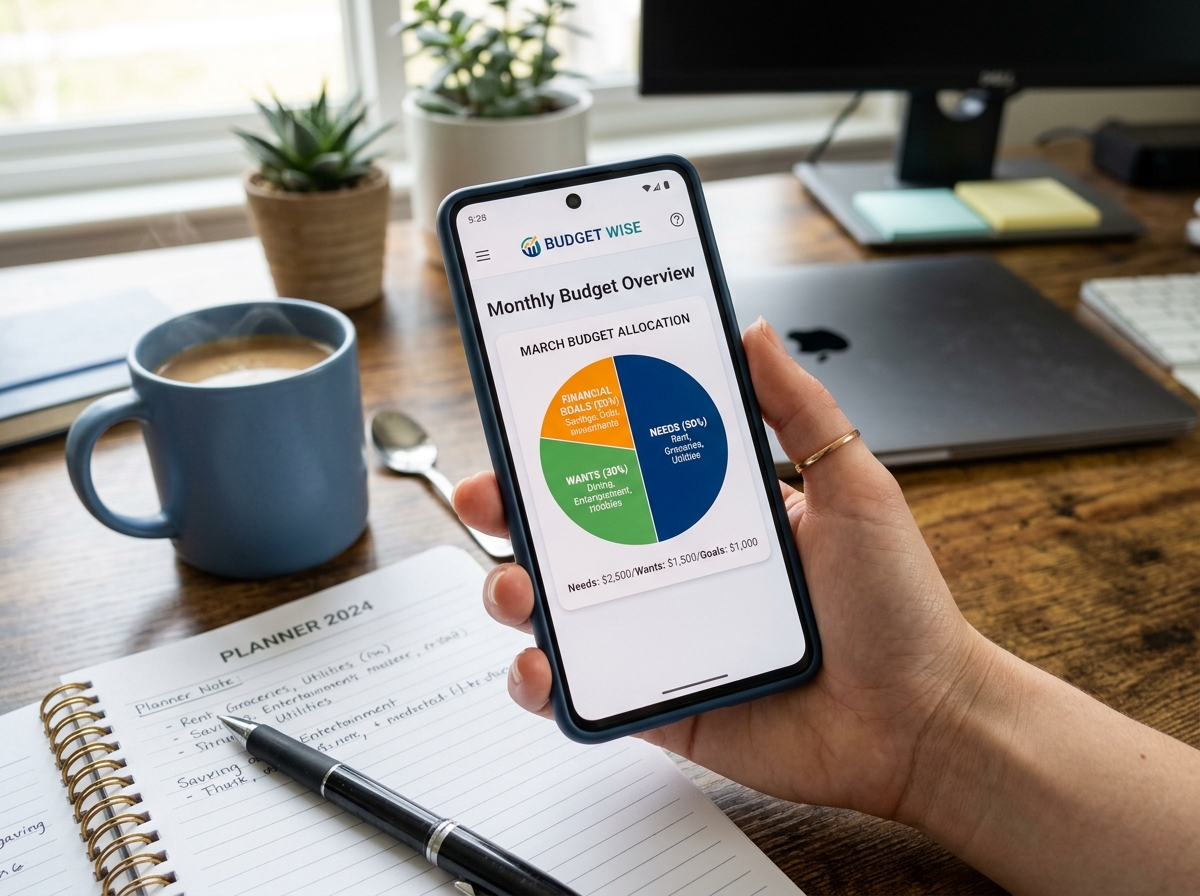
To find the money to invest, try a simple budget:
- 50% for Needs (rent, groceries, utilities).
- 30% for Wants (dining out, hobbies).
- 20% for Financial Goals (debt repayment and investing).
Even if you can only squeeze out $5 or $10 a week from that “Wants” category, you are ready to begin.
How to Make Money Investing Small Amounts: Top Beginner Strategies
The digital age has completely democratized the stock market. You no longer need a guy in a suit on Wall Street to buy a piece of a company. Here are the easy ways to start investing that we love for beginners.
Micro-Investing and Round-Ups
This is the “set it and forget it” champion. Micro-investing apps connect to your debit or credit card. When you buy a coffee for $3.50, the app rounds the purchase to $4.00 and invests that $0.50 for you. It sounds tiny, but if your round-ups average $1.50 a day, that’s $45 a month. Over 20 years at a 7% return, that “spare change” could grow to about $23,500.
Fractional Shares: Owning a Piece of the Giants
Ever wanted to own a piece of a big tech company but realized one single share costs $500? With fractional shares, you can buy $10 worth of that share. You get a “slice” of the stock, and if the company pays a dividend, you get a “slice” of that dividend too. This makes investing in stocks for beginners incredibly accessible.
Robo-Advisors: Your Digital Pilot
If you aren’t sure which stocks to pick, a robo-advisor is a great middle ground. These platforms use algorithms to build a diversified portfolio based on your risk tolerance. You just deposit the money, and they handle the buying, selling, and rebalancing.
| Feature | Micro-Investing Apps | Traditional Brokerage Accounts |
|---|---|---|
| Minimum to Start | Often $0 – $5 | Can range from $0 to $1,000+ |
| Automation | High (Round-ups/Recurring) | Medium (Recurring deposits) |
| Fractional Shares | Standard | Becoming more common |
| Fees | Monthly subscription or % | Often $0 commission, but watch for fund fees |
Check out our full breakdown of investing apps for beginners to find the right fit for your phone.
Best Investment Vehicles for Low-Budget Portfolios
Once you have an account open, what do you actually buy? You want assets that offer broad exposure and low fees. There are plenty of simple investment options for low budget portfolios.
Diversification with ETFs and How to Make Money Investing Small Amounts
An Exchange-Traded Fund (ETF) is like a basket of hundreds of different stocks. Instead of betting on one company, you are betting on the entire market (like the S&P 500, which tracks the 500 largest U.S. companies).
- Broad Market Exposure: One share of an S&P 500 ETF gives you a tiny piece of Apple, Amazon, Microsoft, and 497 others.
- Low Expense Ratios: Because these are passive funds, the fees (expense ratios) are often less than 0.1%.
- Risk Mitigation: If one company in the basket goes bankrupt, the other 499 are there to keep your portfolio afloat.
For more details, see our beginner guide to ETFs and our simple portfolio diversification tips.
Maximizing Retirement Accounts and Employer Matches
If your job offers a 401(k) with a match, that is literally free money. If they match up to 3% and you don’t contribute, you’re essentially turning down a 3% raise. Even if you can only spare 1% of your paycheck right now, start there.
If you don’t have a workplace plan, a Roth IRA is a fantastic alternative. You contribute money you’ve already paid taxes on, and then it grows tax-free. In 2023, you can contribute up to $6,500 ($7,500 if over 50). This is one of our top investing tips for young adults.
Mutual Funds and Alternatives
While some mutual funds have high minimums, Morningstar’s mutual fund screener lists about 200 different funds that accept a $500 minimum deposit. If you have a tax refund or a bonus, this is a great place to put it. You can also look into Real Estate Crowdfunding, which allows you to pool small amounts of money with other investors to buy into large property projects like condos or hotels.
Mastering the Mechanics of Small-Scale Growth
Success in how to make money investing small amounts isn’t about being a genius; it’s about being consistent.
Dollar-Cost Averaging (DCA)
Instead of trying to “time the market” (waiting for the perfect low price), use Dollar-Cost Averaging. This means you invest a fixed amount of money—say $50—every single month, regardless of what the market is doing.
- When prices are high, your $50 buys fewer shares.
- When prices are low, your $50 buys more shares. Over time, this lowers your average cost per share and removes the emotional stress of watching daily price swings. This is one of the basic investing strategies for beginners that actually works.
Dividend Reinvestment Plans (DRIP)
When a company you own pays a dividend, don’t spend it! Most brokers allow you to “enable DRIP.” This automatically uses your dividends to buy more shares of that same stock or fund. It’s like a built-in booster for your compound interest. Understanding the difference between long-term vs short-term investing tips is key here; DRIP is a long-term power move.
Consistency and How to Make Money Investing Small Amounts Over Time
Behavioral finance tells us that we are our own worst enemies. We tend to get excited when the market is up and panic when it’s down. Automation is the cure. By setting up a recurring deposit of $10 a week, you take the decision-making out of the process. You don’t have to remember to invest; it just happens. This helps you avoid the “panic sell” during a downturn, which is a common beginner-friendly mutual fund tip to remember.
Minimizing Fees and Avoiding Common Pitfalls
When you are investing small amounts, fees are your biggest enemy. A $5 commission on a $10 investment is a 50% loss instantly!
- Stick to Commission-Free Brokers: Most major platforms now offer $0 trades.
- Avoid Over-Trading: Buying and selling every week can lead to hidden costs and tax headaches.
- Ignore “Meme” Stocks: Don’t chase hot tips from social media. Stick to diversified building blocks.
- Watch the Expense Ratio: Always check the fee of an ETF or mutual fund. Aim for under 0.20%.
For more on avoiding these traps, read our guide on understanding risk in investing.
Frequently Asked Questions about Small-Scale Investing
Is $100 too little to start investing?
Absolutely not! As we’ve seen, $100 a month can grow to six figures over a 30-year career. Thanks to fractional shares and micro-investing apps, you can start with as little as $5. The “cost of waiting” is far higher than the cost of starting small. If you wait 10 years to start that $100/month habit, you could end up with $80,000 less in the long run.
Should I pay off debt before I start investing?
Prioritize high-interest debt (anything over 7-8%, like credit cards). However, if your employer offers a 401(k) match, try to contribute enough to get that match even while paying off debt—it’s a 100% return on your money that you can’t get anywhere else. For more advice, check out investing-in-stocks-for-beginners-2/.
How long does it take for small investments to grow significantly?
Investing is a marathon, not a sprint. You likely won’t see massive changes in the first year or two. However, around year 10, the “compounding curve” starts to get steeper. By years 20 and 30, the growth becomes exponential. Consistency is the fuel that keeps this engine running.
Conclusion
At QuickFinHub, we believe that wealth building isn’t a “someday” goal—it’s a “today” habit. You don’t need to be an expert or a millionaire to get started. By setting up a simple budget, automating your contributions, and choosing low-cost, diversified funds, you can turn your pocket change into a meaningful portfolio.
The best time to start was ten years ago. The second best time is today. Don’t let the “perfection” of a large balance stop you from making “progress” with a small one.
Start your journey with QuickFinHub’s Investing Basics and take control of your financial future one dollar at a time.
