
Why Most People Struggle to Organize Their Personal Finances (And How to Fix It)
The best way to organize personal finances starts with five core steps: list all your accounts, build a budget, track your spending, automate savings, and secure your documents.
Quick Answer: The 5-Step System
- List every account – Write down all bank accounts, debts, investments, and insurance policies
- Build a budget – Use a method like the 50/30/20 rule to plan where your money goes
- Track your spending – Review actual expenses weekly using an app or spreadsheet
- Automate savings and bills – Set up automatic transfers so good habits happen without willpower
- Secure your documents – Store financial records safely, both physically and digitally
Nearly 69% of Americans live paycheck to paycheck. Yet most of them already have some kind of budget. The problem isn’t awareness. It’s having a system that actually works in real life.
If you’re in your 20s, you’re probably juggling a lot at once. New income. Rent. Student loans. Subscriptions you forgot you signed up for. It can feel like your money just disappears every month.
Here’s the thing: financial organization isn’t about being perfect with money. It’s about knowing where your money is, where it’s going, and where you want it to go next.
A Charles Schwab survey found that 96% of people who organize their finances into a plan feel confident they can reach their goals. That number is hard to ignore.
This guide walks you through exactly how to build that system – from scratch, step by step.

Why Financial Organization is the Foundation of Wealth
At QuickFinHub, we believe that you can’t build a skyscraper on a swamp. Financial organization is the bedrock upon which all your future wealth is built. When your money is a mess, your life feels like a mess. Research shows that nearly 9 out of 10 Americans report that their finances are a major stressor. By taking control, you aren’t just moving numbers around a spreadsheet; you are actively reducing anxiety and reclaiming your time.
The best way to organize personal finances is to view it as an empowering process rather than a restrictive one. Instead of a budget being a “no-fun zone,” think of it as a tool that gives you permission to spend on what you truly value. This mindset shift is essential for Learning the Ropes of Personal Finance: A Beginner’s Guide.
When you are organized, you create positive cash flow. This means you have more money coming in than going out, which is the secret sauce for every other financial milestone. Whether you’re following a Beginner Guide to Financial Planning or aiming for early retirement, organization ensures that not a single dollar is wasted on “spending leaks” like zombie subscriptions or late fees.
The Best Way to Organize Personal Finances: A Step-by-Step System
To get started, we need to see the “Full Picture.” You can’t manage what you haven’t measured. This involves a complete inventory of your financial life.
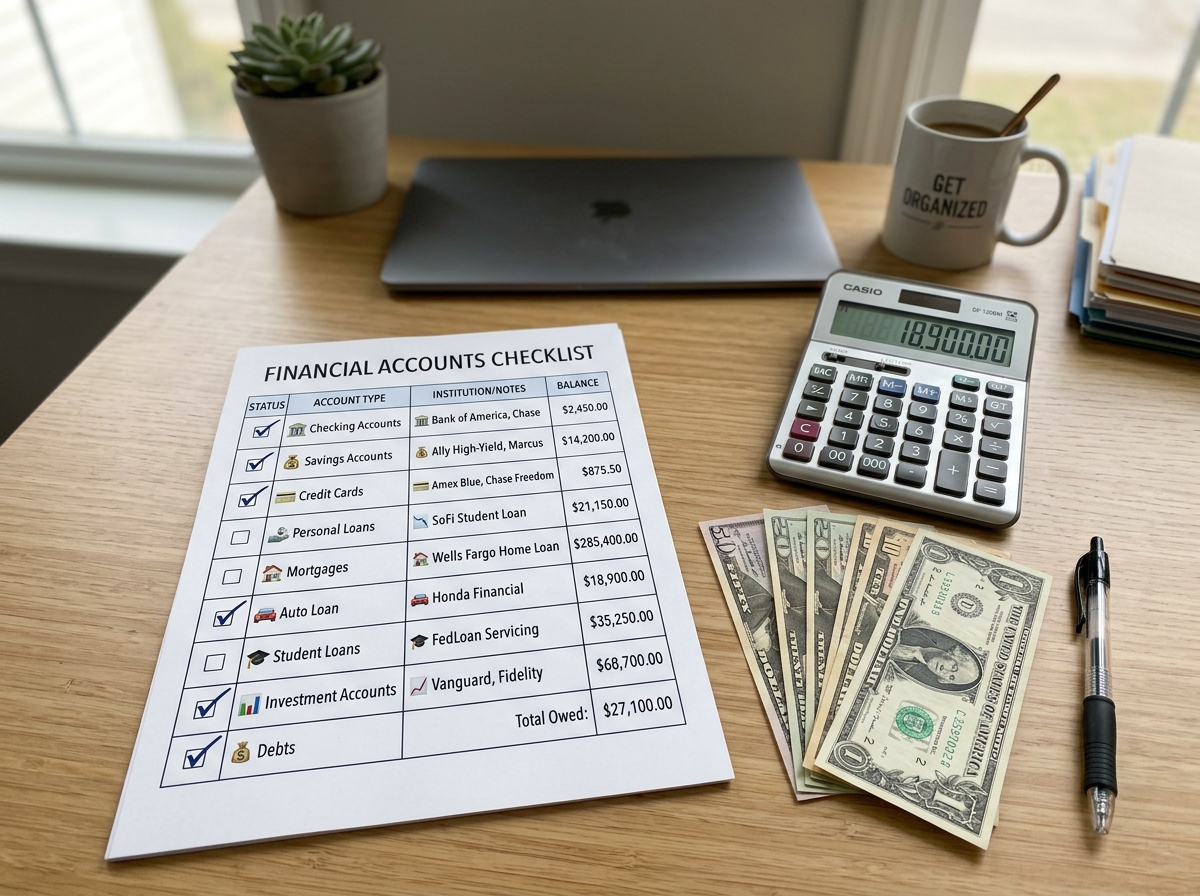
Essential First Steps for the Best Way to Organize Personal Finances
The first step is a “Brain Dump.” We recommend sitting down for 60 to 90 minutes to gather every piece of financial data you own. This includes:
- Bank Accounts: Checking, savings, and any old accounts you haven’t touched in years.
- Debts: Credit card balances, student loans, car loans, and personal loans.
- Investments: Your 401(k), IRAs, or brokerage accounts.
- Insurance: Health, auto, renters, and life insurance policies.
Once you have this list, calculate your Net Worth (Assets minus Liabilities). Don’t panic if the number is negative—especially if you’re a young adult with student loans. The goal is to establish a baseline.
Digital consolidation is your best friend here. Instead of hunting through paper mail, log into your accounts and opt for paperless billing. This centralizes your records and makes Personal Finance 101: Stress-Free Saving Tips much easier to implement. Also, don’t forget to Free Annual Credit Report to ensure no “ghost” accounts are dragging down your score. Understanding the Understanding the ABCs of Credit Scores is a vital part of this initial audit.
Setting Priorities Within the Best Way to Organize Personal Finances
Once the accounts are listed, we need to rank them. The best way to organize personal finances involves a clear hierarchy of needs:
- The Starter Emergency Fund: Aim for $1,000 or one month of essential expenses. This keeps a flat tire from becoming a financial disaster.
- High-Interest Debt: If you have credit card debt with interest rates between 14% and 25%, this is a financial emergency. Focus on Mastering Debt Management: A Guide for Beginners to wipe these out.
- Retirement Match: If your employer offers a 401(k) match, contribute enough to get the full amount. It’s a 100% return on your money.
- The Full Emergency Fund: Once the high-interest debt is gone, build a 3-to-6-month cushion.
For 2026, you can contribute up to $24,500 to workplace plans like 401(k)s and $7,500 to an IRA. Keeping these limits in mind helps you set long-term targets.
Mastering Your Cash Flow: Budgeting Methods and Tracking
Budgeting is simply a plan for your money before the month begins. Here is how the most popular methods stack up:
| Method | Best For | Logic |
|---|---|---|
| 50/30/20 Rule | Beginners | 50% Needs, 30% Wants, 20% Savings/Debt |
| Zero-Based | Goal Crushers | Every dollar is assigned a job until $0 remains |
| Pay-Yourself-First | Minimalists | Automate savings first, spend whatever is left |
For most young adults, the 50/30/20 rule is the most accessible. It provides a flexible framework that doesn’t require tracking every single penny. However, if you have aggressive debt goals, Zero-Based Budgeting for Beginners might be more effective.
When Creating a Sustainable Budget Plan, be honest about your variable costs. We often underestimate what we spend on groceries or “fun.” Reviewing the last three months of bank statements will give you a “real-world” average rather than an “ideal” one. If the math doesn’t add up, look for Easy Ways to Reduce Monthly Expenses, such as cutting unused streaming services or negotiating your internet bill.
Effective Tools for Tracking Income and Expenses
You don’t need a PhD in Finance to track your money. The best way to organize personal finances is the one you will actually stick to.
- Budgeting Apps: Tools like YNAB or EveryDollar are great for Budgeting Apps for Beginners. They sync with your bank and categorize spending automatically.
- Spreadsheets: If you love control, Google Sheets or Excel offer excellent Simple Tools for Budget Management.
- Pen and Paper: Believe it or not, 49% of low-income individuals still prefer this method because it makes spending feel more “real.”
Whichever you choose, the key is Tracking Daily Spending Effectively. We recommend a 10-minute “Weekly Reset” where you check your actual spending against your budget. If you’re over in one category, simply move money from another. No shame, just adjustments. For those who prefer a home-grown system, learning How to Track Expenses at Home can be a game-changer.
Securing Your Legacy: Document Management and Digital Safety
Organization isn’t just about the numbers; it’s about the paperwork. If you were to vanish tomorrow, could your loved ones find your accounts?
Physical and Digital Filing
We live in a hybrid world. You need a system for both:
- Physical: Get a fireproof and waterproof safe. Store your birth certificate, Social Security card, and estate planning documents here. (Pro tip: Avoid storing these in a bank’s safe deposit box, as they can be hard for heirs to access without a court order).
- Digital: Create an encrypted folder on your computer or cloud drive. Use a clear folder structure: Tax Returns, Insurance Policies, Investment Statements, and Major Receipts.
Cybersecurity and Passwords
In 2026, your digital security is your financial security. Use a password manager like 1Password or Dashlane to store unique, complex passwords for every financial site. Never use public Wi-Fi to check your bank balance unless you are using a VPN.
Regarding retention, follow Fidelity’s guide on document retention. Generally, keep tax returns for seven years, but you can shred monthly investment statements once you receive the annual summary.
Finally, ensure you have beneficiary designations on all accounts. This allows your assets to pass directly to your loved ones, bypassing the long and expensive probate court process.
Automating Your Success and Setting Long-Term Goals
Willpower is a finite resource. Don’t rely on it to save money. The best way to organize personal finances is to “set it and forget it.”
By using Automatic Savings Strategies for Beginners, you ensure that your future self is paid before you have a chance to spend the money. Set up a recurring transfer from your checking to your savings account on the day you get paid. This “Pay Yourself First” mentality is how wealth is built.
Sinking Funds: The Secret Weapon
A sinking fund is a small amount of money set aside each month for a specific, non-monthly expense. Think of it as Simple Ways to Build an Emergency Fund for known events.
- Car Maintenance: $50/month.
- Holiday Gifts: $40/month.
- Annual Insurance Premium: Total cost divided by 12.
When the bill arrives, you don’t panic—you just pay it with the money you’ve already organized. This is essential when Budgeting for Savings: Where to Begin. Aim to save and invest 15% to 20% of your income to ensure a comfortable future.
Frequently Asked Questions about Organizing Finances
How often should I review and adjust my financial plan?
We recommend three levels of review:
- Weekly: A 10-minute check to categorize expenses and ensure you’re on track for the month.
- Monthly: A 30-minute session at the start of the month to build your new budget and review the previous month’s wins and losses.
- Semi-Annually: Every six months, do a deep dive. Check your net worth, review your insurance coverage, and adjust your goals if you’ve had a major life transition (like a new job or a move).
Should I prioritize paying off debt or investing for retirement?
A good rule of thumb is the 6% interest rule. If your debt (like a credit card) has an interest rate above 6%, pay it off aggressively before investing extra money. However, always contribute enough to get your employer’s retirement match first—that is a 100% return that you shouldn’t pass up. Use the “Debt Snowball” (paying smallest balances first for a psychological win) or “Debt Avalanche” (paying highest interest first to save money) to stay organized.
How do I organize my finances if I have an irregular income?
If you’re a freelancer or gig worker, budget from your “Floor,” not your “Ceiling.” Look at your three lowest-earning months from the last year and use that average as your base income. Any money you earn above that amount goes directly into a “Buffer” account or into your emergency fund. This creates a stable “salary” for yourself even when your income fluctuates.
Conclusion
Organizing your finances might feel like a chore at first, but it is the ultimate act of self-care. By implementing the best way to organize personal finances, you are moving from a state of “financial survival” to “financial mastery.”
At QuickFinHub, our mission is to provide the tailored, accessible advice young adults need to navigate these transitions. You don’t have to be perfect—you just have to be consistent. Start small, use the tools available, and watch how quickly your financial clarity turns into financial freedom.
Start organizing your budget today and take the first step toward the life you want.
