
Is Your Savings Account Actually Costing You Money?
A money market accounts comparison is the fastest way to see how much interest you’re leaving on the table — and the gap might shock you.
The national average money market account APY is just 0.43%. But the best accounts right now pay up to 4.00% APY. On a $10,000 balance, that’s the difference between earning $43 a year and earning $400.
Here’s a quick look at how today’s top money market accounts stack up:
| Bank | APY | Minimum Deposit | Monthly Fee | Key Perk |
|---|---|---|---|---|
| Quontic Bank | 4.00% | $100 | $0 | Competitive flat rate |
| Zynlo Bank | 3.90% | $0 | $0 | No minimum required |
| Ally Bank | 3.30% | $0 | $0 | Up to $10 ATM fee reimbursement |
| Sallie Mae | 3.55% | $0 | $0 | No hoops, no tiers |
| Vio Bank | 3.65% | $100 | $0 | Simple, no-fee access |
Rates are variable and subject to change.
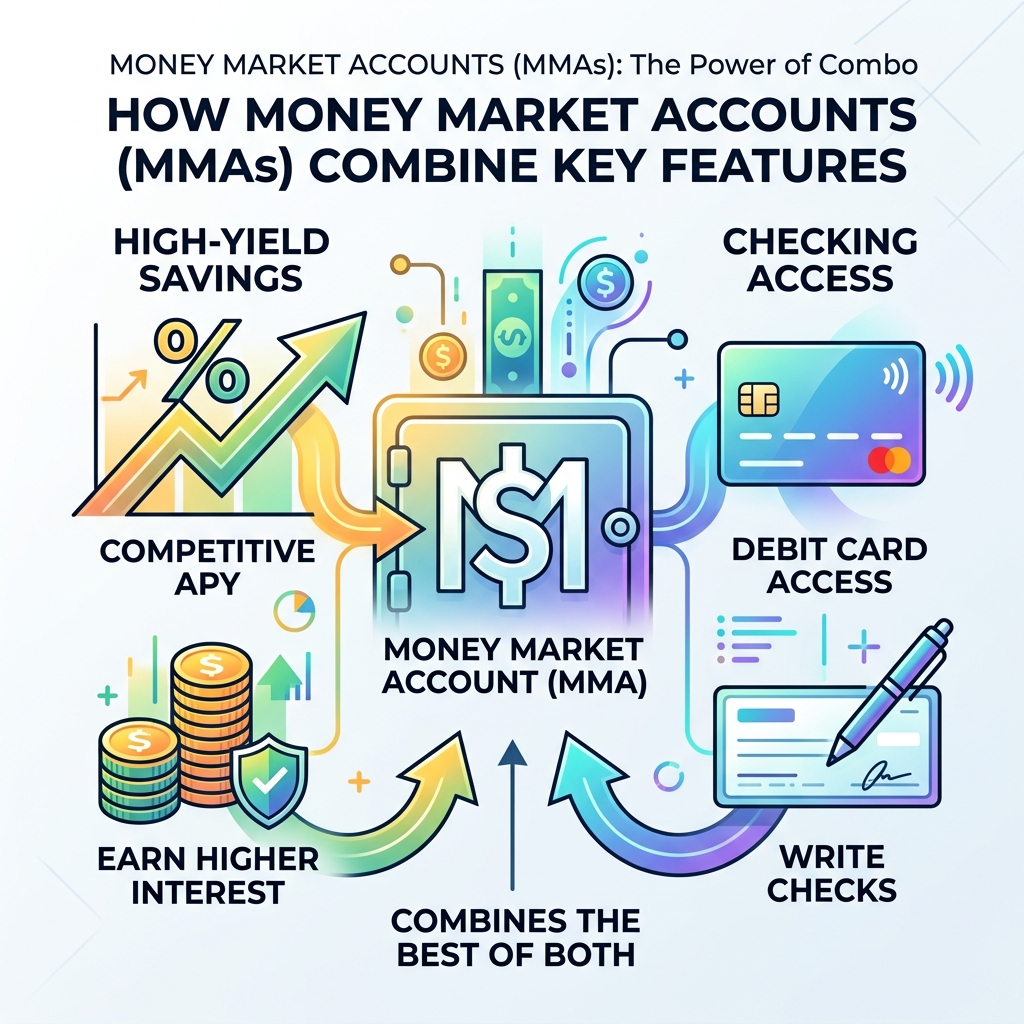
If you’re in your 20s and just starting to build savings — for an emergency fund, a move, or eventually a home — a money market account (MMA) sits in a sweet spot. You get higher interest than a regular savings account, plus the flexibility to actually access your money when life happens. Think checks, debit cards, and ATM access, all in one account.
Unlike a traditional savings account that just sits there, or a CD that locks your money away, an MMA works harder for you without tying your hands.
The tricky part? Not all MMAs are created equal. Rates vary wildly. Some accounts look great on paper but hide fees or require big minimum balances. Others are straightforward with no strings attached.
That’s exactly what this guide cuts through.
Money Market Accounts vs. Money Market Funds: Key Differences
When you start looking into where to park your cash, you’ll likely run into two terms that sound almost identical: Money Market Accounts (MMAs) and Money Market Funds (MMFs). While they share a similar name, they are fundamentally different financial animals.
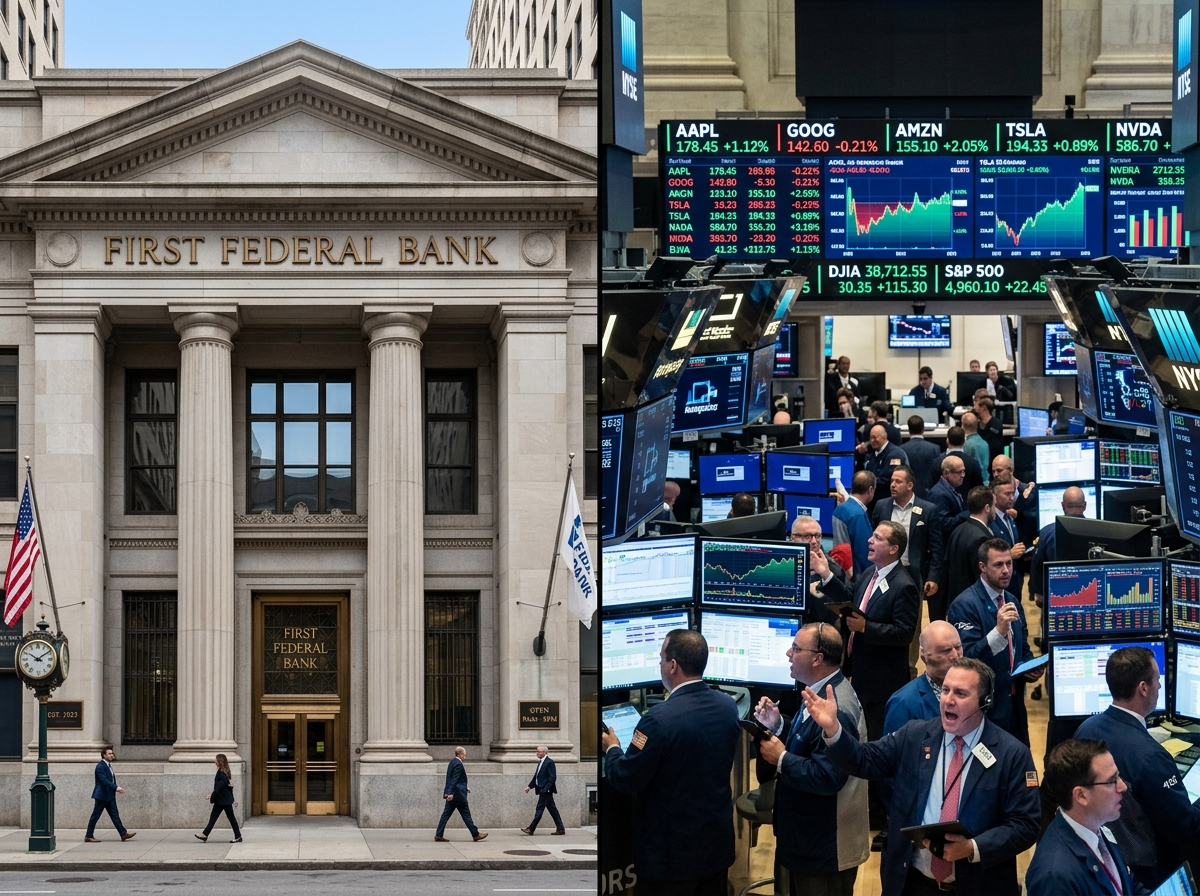
A Money Market Account is a bank product. It is a type of deposit account offered by banks and credit unions. The biggest “peace of mind” feature here is federal insurance. If the bank is a member of the Federal Deposit Insurance Corporation (FDIC) or the National Credit Union Administration (NCUA), your deposits are protected up to $250,000 per depositor, per institution. For most of us starting out, this safety net is non-negotiable.
On the flip side, a Money Market Fund is an investment product. It’s a type of mutual fund that invests in highly liquid, short-term debt like government-backed securities. While these are considered very low-risk, they are not FDIC-insured. They aim to maintain a “stable NAV” (Net Asset Value) of $1.00 per share, but this is a goal, not a guarantee.
If you are looking for safe investing options for beginners, MMAs are often the better starting point because they eliminate market risk entirely. They are also excellent simple investment options for a low budget because many allow you to start with as little as $0 to $100.
Understanding the Risk of Loss
Can you actually lose money? In a bank-held money market account, the answer is virtually no, provided you stay under the $250,000 insurance limit. Your principal is stable. Even if the bank goes under, the federal government has your back.
With a money market fund, however, there is a theoretical risk. While rare, a fund can “break the buck,” meaning its NAV drops below $1.00. This usually only happens during extreme market volatility. Some funds used as brokerage settlement accounts may offer SIPC (Securities Investor Protection Corporation) coverage, but this protects against the brokerage failing, not against the value of the investment dropping.
Cost Structures and Fees
The way these products charge you also differs. Money market accounts often have “monthly maintenance fees,” though many modern online banks waive these if you keep a minimum balance (sometimes as low as $50 or $100).
Money market funds use “expense ratios.” This is a percentage of your investment taken off the top to cover management costs. For example, a fund with a 0.10% expense ratio costs you $10 for every $10,000 invested. The industry average for these funds is around 0.25%, so it pays to look for low-cost options if you go the investment route.
Money Market Accounts Comparison: Rates, Fees, and Requirements
To make an informed choice, you need a side-by-side money market accounts comparison. Interest rates aren’t just numbers; they are the engine that grows your wealth while you sleep.
Currently, the national average APY for MMAs is a measly 0.43%. However, top-tier banks are offering rates 10 times that average. Understanding how these rates work is crucial, so check out the beginner’s guide to understanding interest rates to see how compounding turns a small monthly contribution into a significant sum over time.
Top Features to Evaluate in a Money Market Accounts Comparison
When we look at the best accounts, we don’t just look at the APY. We look at the “lifestyle features” that make the account usable:
- Check-Writing Privileges: Can you pay your rent or a contractor directly from the account?
- Debit Cards: Does it come with a card for quick grocery runs or emergencies?
- ATM Reimbursements: Some banks, like Ally or NBKC, reimburse you $10–$12 a month for fees charged by other ATMs.
- Mobile Banking: Is the app easy to use? For young adults, a clunky app is often a dealbreaker.
Why a Money Market Accounts Comparison Matters for Young Adults
For those of us navigating early career moves or finishing school, “minimums” matter. Some “premium” money market accounts require $10,000 or $25,000 just to open the door. That’s not helpful if you’re just starting your first emergency fund.
However, many digital-first banks have disrupted this. Banks like Zynlo and Ally often have $0 minimum opening deposits and $0 monthly fees. This accessibility is a game-changer. If you’re confused by the terminology, our guide on identifying interest rates: a starter pack can help you decode the fine print before you sign up.
How MMAs Stack Up Against Other Savings Options
How does an MMA compare to that piggy bank or a standard savings account?
- High-Yield Savings Accounts (HYSA): These often offer similar APYs to MMAs. The main difference? HYSAs rarely offer checks or debit cards. They are “set it and forget it” accounts. MMAs are for “park it but might need it” cash.
- Certificates of Deposit (CDs): CDs usually offer higher rates but lock your money away for months or years. If you pull it out early, you pay a penalty. MMAs give you the high rate plus the exit door.
- Traditional Savings: These are the accounts at big “brick-and-mortar” banks that pay 0.01%. Avoid these. They are essentially losing value against inflation every day.
One thing to remember is Regulation D). Historically, federal law limited you to six “convenient” withdrawals per month from savings and money market accounts. While the government relaxed this rule recently, many banks still enforce it. If you go over six transfers or checks, they might charge you a fee (often around $5 to $15). To automate your growth without hitting these limits, see how automatic savings: making your money work for you can streamline your finances.
Is a Money Market Account Right for Your Financial Goals?
An MMA isn’t for retirement (use a 401k or IRA for that). It’s for the “medium-term” stuff:
- Emergency Funds: The gold standard. You want your 3–6 months of expenses earning 4% interest, but you need to be able to write a check if the car breaks down at 2 AM.
- Wedding Planning: You’re collecting cash from relatives and saving monthly, but you need to pay vendors. An MMA is perfect for this.
- Home Down Payments: If you plan to buy a house in 2 years, you shouldn’t put that money in the stock market (too risky). An MMA keeps it safe and growing.
Using automatic savings strategies for beginners allows you to funnel a portion of every paycheck into these goals without even thinking about it.
Red Flags to Watch For
Don’t let a high number blind you to bad terms. Watch out for:
- Introductory Rates: A bank might offer 5% for the first three months, then drop it to 0.50%. Read the “teaser” fine print.
- Complex Fee Schedules: Watch for “paper statement fees” or “inactivity fees.”
- Tiered Rates: Some banks only pay the high APY on balances over $25,000. If you have $5,000, you might earn next to nothing.
- Inflation Risk: While MMAs are safe, if inflation is 5% and your MMA pays 4%, you are technically losing a little purchasing power. It’s still better than 0.01%, but it’s a reminder that MMAs are for cash you need soon, not long-term wealth building.
Frequently Asked Questions about Money Market Accounts Comparison
Can I lose money in a money market account?
Generally, no. Because MMAs are deposit accounts at banks, they are protected by FDIC insurance up to $250,000 per person. Your principal is stable. The only way to “lose” money is if the bank charges fees that exceed the interest you earn, or if the bank is not federally insured (always check for the FDIC/NCUA logo!).
How many withdrawals can I make each month?
Most banks still stick to a limit of six “convenient” withdrawals per statement cycle. This includes checks, debit card purchases, and online transfers. However, ATM withdrawals and in-person withdrawals at a branch are often unlimited. If you need an account for 20 transactions a month, you need a checking account, not an MMA.
What is a good APY for a money market account in 2026?
Given that the national average is around 0.43% to 0.56%, any rate above 3.50% to 4.00% is considered highly competitive. Rates fluctuate based on the Federal Reserve’s actions. When the Fed raises rates, MMA yields usually go up. When the Fed cuts rates, your MMA yield will likely drift down shortly after.
Conclusion
Navigating your 20s involves a lot of financial “firsts”—your first real salary, your first emergency fund, and maybe your first big savings goal. A money market accounts comparison isn’t just about chasing a decimal point; it’s about finding a tool that fits your life.
At QuickFinHub, we believe that personal finance shouldn’t be a headache. By choosing an account that offers high yields with low barriers to entry, you’re giving your future self a massive head start. Whether you’re saving for a move to a new city or just want the security of a “rainy day” fund, the right MMA is a cornerstone of a solid budget.
Ready to take control of your cash? Start your financial journey today and let’s make your money work as hard as you do.
