
Why Finding the Best Zero Balance Account for Students Can Save You Hundreds a Year
The best zero balance account for students is one with no monthly maintenance fees, no minimum balance requirement, and easy mobile access. Here are the top picks at a glance:
- Chime – No monthly fees, 47,000+ fee-free ATMs
- Chase College Checking – No fees for up to 5 years, large branch network
- Bank of America Advantage SafeBalance – No fees under age 25, 16,000+ ATMs
- PNC Virtual Wallet Student – $0 monthly fee for up to 6 years, 60,000+ ATMs
- Discover Cashback Debit – 1% cash back on debit purchases, no monthly fee
- Current – 4% interest on deposits up to $6,000, no overdraft fees
- Citizens Student Checking – No fees under age 25, early direct deposit
College is expensive enough. Tuition, rent, groceries, textbooks — the last thing you need is your bank quietly draining your account with monthly fees you barely notice until it’s too late.
Many banks charge up to $15 a month in maintenance fees if you don’t meet certain balance minimums. For a student living on a tight budget, that’s $180 a year gone for nothing.
That’s where zero balance student accounts come in.
A zero balance account simply means there is no minimum balance required to keep the account open and fee-free. You can have $5 in your account or $500 — the bank won’t penalize you either way.
For most students, this is a game-changer. You get the full banking experience — debit card, mobile app, ATM access, direct deposit — without the stress of hitting a balance threshold every month.
The good news? Several major banks and online-only banks now offer genuinely excellent zero balance accounts built specifically for students. Some even throw in perks like cash back, early paycheck access, and sign-up bonuses.
This guide breaks them all down so you can pick the right one fast.
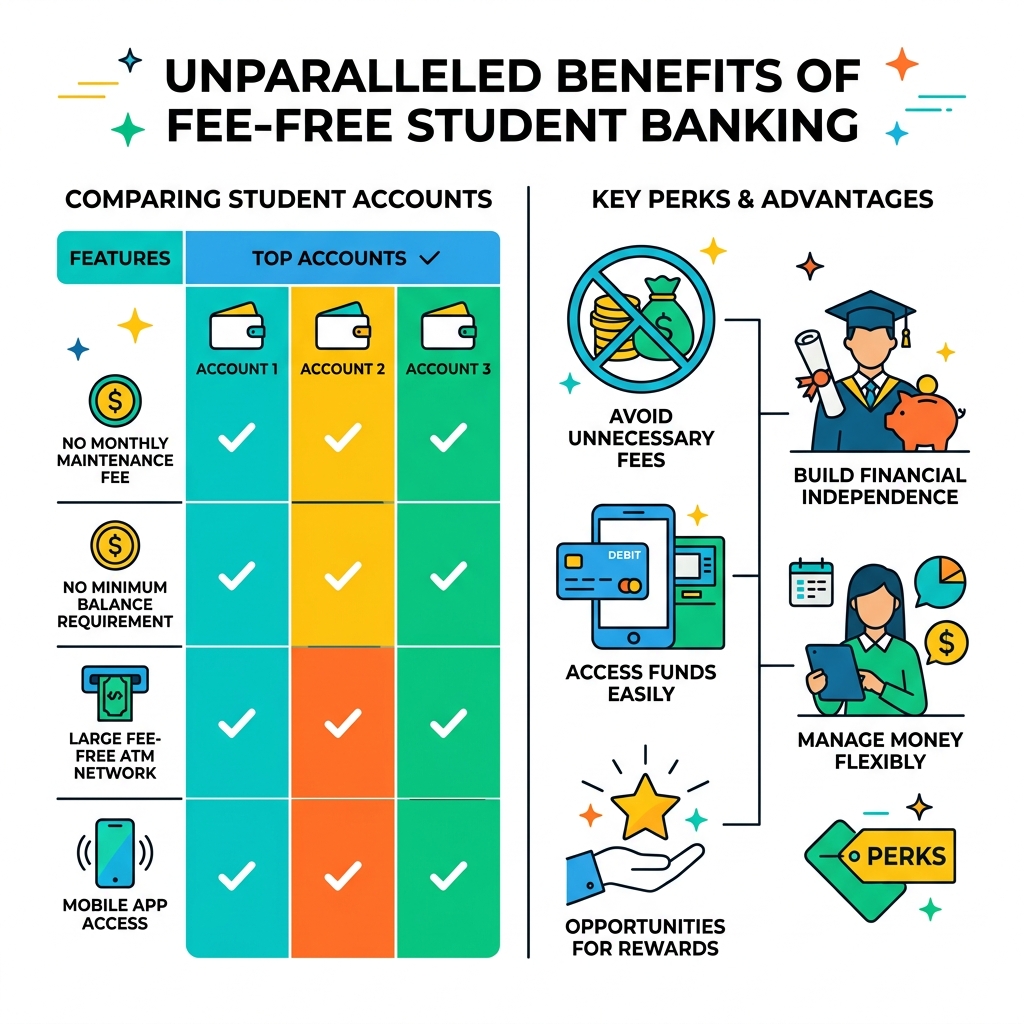
What Makes a Zero Balance Account Ideal for College Life?

When you’re navigating the student lifestyle, your financial situation can be a bit of a roller coaster. One week you might have a decent chunk of change from a part-time job or financial aid disbursement; the next, you’re scraping together pennies for a late-night study snack.
A zero balance account is the ultimate safety net for this “feast or famine” cycle. Traditional accounts often require a “minimum daily balance” (sometimes $500 or $1,500) just to avoid a $10–$15 monthly maintenance fee. For a student, that’s a tall order. By choosing the best zero balance account for students, you ensure that even if your balance hits $0.01 right before your next paycheck, you won’t be hit with a fee that sends you into the negatives.
We believe these accounts are essential for several reasons:
- No Monthly Maintenance Fees: Most student-specific accounts waive these fees entirely for a set number of years or until you hit a certain age (usually 24 or 25).
- Overdraft Prevention: Many of these accounts are designed to simply decline a transaction if you don’t have the funds, rather than letting it go through and charging you a $35 overdraft fee. This is a massive stress-reliever when you’re learning simple-budgeting-tips-for-students.
- Flexibility: Whether you’re using saving-tips-for-college-students to build an emergency fund or just trying to cover rent, these accounts don’t trap your money behind restrictive balance requirements.
Essential Features of the best zero balance account for students
While “zero balance” is the headline, a great student account needs more than just a lack of fees. We look for these high-value features:
- Robust ATM Access: You shouldn’t have to pay $3 to withdraw $20. Look for banks with large, fee-free networks. For example, Chime offers access to over 47,000 fee-free ATMs, while PNC provides approximately 60,000.
- Mobile Check Deposit: If grandma sends you a birthday check, you shouldn’t have to hunt down a physical branch. A top-tier mobile app is non-negotiable.
- Zelle Integration: This is the gold standard for splitting pizza, rent, or utilities with roommates instantly.
- Financial Tools: Some accounts offer built-in spend trackers or “round-up” features that help you start investing-tips-for-young-adults by saving small amounts of change automatically.
Top-Rated best zero balance account for students Options
Choosing the right bank depends on whether you prefer the security of a local branch or the high-tech features of an online-only platform.
| Bank / Account | Monthly Fee | ATM Network Size | Age/Student Limit |
|---|---|---|---|
| Chime | $0 | 47,000+ | None |
| Chase College Checking | $0 | 15,000+ | 17–24 (up to 5 years) |
| Bank of America SafeBalance | $0 | 16,000+ | Under 25 |
| PNC Virtual Wallet Student | $0 | 60,000+ | Up to 6 years |
| Capital One Money | $0 | 70,000+ | Under 18 (transition at 18) |
| Discover Cashback Debit | $0 | 60,000+ | None |
| Navy Federal Campus Checking | $0 | 30,000+ | 14–24 |
If you are looking for a traditional powerhouse, the Bank Account Options for Kids, Teens, Students & Young Adults | Bank of America provide a great pathway. Their Advantage SafeBalance Banking has no monthly maintenance fee for anyone under 25 and specifically avoids overdraft fees by declining transactions that exceed your balance.
For those with a military connection (including children of veterans or active duty members), the Free Campus Checking | Navy Federal Credit Union is an incredible deal. It offers up to $120 a year in ATM fee rebates, meaning you can use almost any ATM for free.
High-Tech Online Banking vs. Traditional Branch Access
The debate between online-only fintechs and traditional “brick-and-mortar” banks is a big one for students.
Online-Only Banks (Chime, Current, Discover): These are often the best zero balance account for students who want a mobile-first experience. Chime, for instance, has no monthly fees and no minimum balance requirements. Current is particularly impressive, offering 4% interest on deposits up to $6,000 — a rate far higher than most student accounts. These banks focus on personal-finance-budgeting-tips-for-young-adults by providing real-time transaction alerts and sleek interfaces.
Traditional Banks (Chase, Bank of America, PNC, Citizens): The primary advantage here is the branch network. If you need to deposit cash frequently or want to talk to a human being about a car loan or a lost card, Chase or Bank of America are hard to beat. Chase College Checking offers a $0 monthly fee for up to five years for students aged 17–24. PNC’s Virtual Wallet Student is also a strong contender, offering $0 monthly service charges for up to six years for active students and a “Low Cash Mode” that gives you extra time to resolve negative balances.
Rewards and Perks for Student Savers
Why settle for just a place to store your money when you could be earning rewards?
- Cashback: Discover Cashback Debit offers 1% cash back on up to $3,000 in monthly debit card purchases. That’s potentially $360 a year just for buying things you already need.
- Sign-up Bonuses: Chase often offers a $100–$125 bonus for new student customers who complete a certain number of qualifying transactions (like 10 debit card purchases) within 60 days.
- Early Direct Deposit: Banks like Chime, Citizens, and Current allow you to receive your paycheck up to two days early if you have direct deposit set up. This is a lifesaver when you’re figuring out how-to-start-saving-money-in-college and need funds for weekend plans.
Step-by-Step Guide to Opening Your Account Online
Opening the best zero balance account for students has never been easier. Most of the options listed above allow you to apply entirely through your smartphone or laptop in about 10 minutes.
1. Gather Your Documents: You will generally need your Social Security Number (SSN), a government-issued ID (like a driver’s license or passport), and proof of your student status.
2. Proof of Enrollment: While some banks just ask for your school name and expected graduation date, others might require a scan of your student ID, a recent transcript, or an official acceptance letter.
3. The Application: Fill out your personal details, including your U.S. residential address. If you are a student living on campus, some banks like Bank of America suggest using your home address for faster verification.
4. Initial Deposit: While many of these are “zero balance” accounts, some require a small initial deposit (like $25 for VeraBank or $100 for some Bank of America tiers) to “trigger” the account opening. You can usually do this via a transfer from another account, a debit card, or a mobile check deposit.
5. Digital Signatures: You’ll sign your cardholder agreement electronically. Once approved, your physical debit card usually arrives in the mail within 5–7 business days, but many banks give you a “virtual card” in their app immediately so you can start spending via Apple Pay or Google Pay.
This streamlined process is a major part of budgeting-on-a-low-income; it removes the “headache” of traditional banking and lets you focus on your studies.
Eligibility Requirements for the best zero balance account for students
Eligibility varies slightly by bank, but the general rules are:
- Age: Usually between 17 and 24. Some accounts, like Capital One MONEY, allow kids as young as 8 to join with a parent, while VeraBank’s student account starts at age 13.
- Student Status: You typically need to be enrolled in a high school, college, university, or vocational program.
- Graduation Date: Banks use this to track when your “student status” expires.
Knowing your graduation date is key for zero-based-budgeting-for-beginners, as it helps you plan for the day your account might transition to a standard (and potentially fee-bearing) version.
Frequently Asked Questions about Student Banking
Are there any hidden fees in zero balance student accounts?
While the monthly maintenance fee is $0, “zero balance” doesn’t mean “zero fees ever.” You should still watch out for:
- Out-of-Network ATMs: Even if the bank doesn’t charge you, the ATM owner might.
- Wire Transfers: Receiving or sending a wire transfer can still cost $15–$35.
- Paper Statements: Many banks like VeraBank and GTE Financial charge a small fee ($3) if you don’t opt into eStatements.
- Foreign Transaction Fees: If you study abroad, some debit cards charge 3% on every purchase.
What happens to my account after I graduate?
Most student accounts aren’t “forever.” Once you hit age 24 or 25, or 5–6 years after opening the account, the bank will automatically convert it to a standard checking account.
- Citizens Bank converts its student account to a “One Deposit Checking” account at age 25.
- Chase will begin charging a monthly fee unless you meet new requirements (like a certain balance or monthly direct deposit).
- The Move: We recommend checking your account status a few months before graduation to see if you need to switch to a different bank to keep avoiding fees.
Can international students open these accounts?
Yes! Many traditional banks like Chase and Bank of America allow international students to open accounts. You will typically need to visit a branch in person and provide your passport, I-20 form, and proof of U.S. residency. You may not need an SSN; an Individual Taxpayer Identification Number (ITIN) is often sufficient.
Conclusion
Finding the best zero balance account for students is one of the smartest financial moves you can make during your college years. By eliminating monthly fees and minimum balance requirements, you’re giving yourself the room to breathe while you learn to manage your money.
At QuickFinHub, we are dedicated to helping young adults navigate these transitions with confidence. Whether you’re splitting a bill with Zelle or saving your first $1,000, the right bank is your partner in building long-term wealth and financial literacy. Don’t let your hard-earned money disappear into a bank’s “maintenance fee” pocket. Pick an account that works for you, stay curious about your finances, and Start your financial journey today.
