
Why Planning Monthly Savings for Trips Is the Smartest Move You Can Make
Monthly savings for trips is the practice of setting aside a fixed amount each month toward a specific travel goal — and it’s simpler than most people think.
Here’s the quick version:
- Estimate your total trip cost (flights, hotel, food, activities, plus a 10-15% buffer)
- Divide that number by the months until your trip — for example, a $2,500 trip in 7 months = about $357/month
- Open a dedicated savings account and automate that transfer every payday
- Cut variable expenses like dining out, subscriptions, and coffee runs to hit your target
- Boost your fund with side income, travel rewards, or selling unused items
Even saving as little as $20 a month can build toward a real vacation over time. And at $357/month, a $2,500 trip is achievable in under a year.
Travel feels out of reach for a lot of people. Especially when rent, groceries, and student loans are already eating most of your paycheck.
But here’s the thing: most people aren’t bad at earning money — they just haven’t built a system for saving it.
One person saved $7,000 in a single year on a $28,000 salary by tracking every expense, moving in with roommates, selling their car, and picking up freelance work. They didn’t have a secret income source. They just had a plan.
That’s exactly what this guide gives you — a practical, step-by-step plan to turn your travel dreams into a funded reality, even on a tight budget.

Calculating Your Total Trip Cost and Savings Timeline
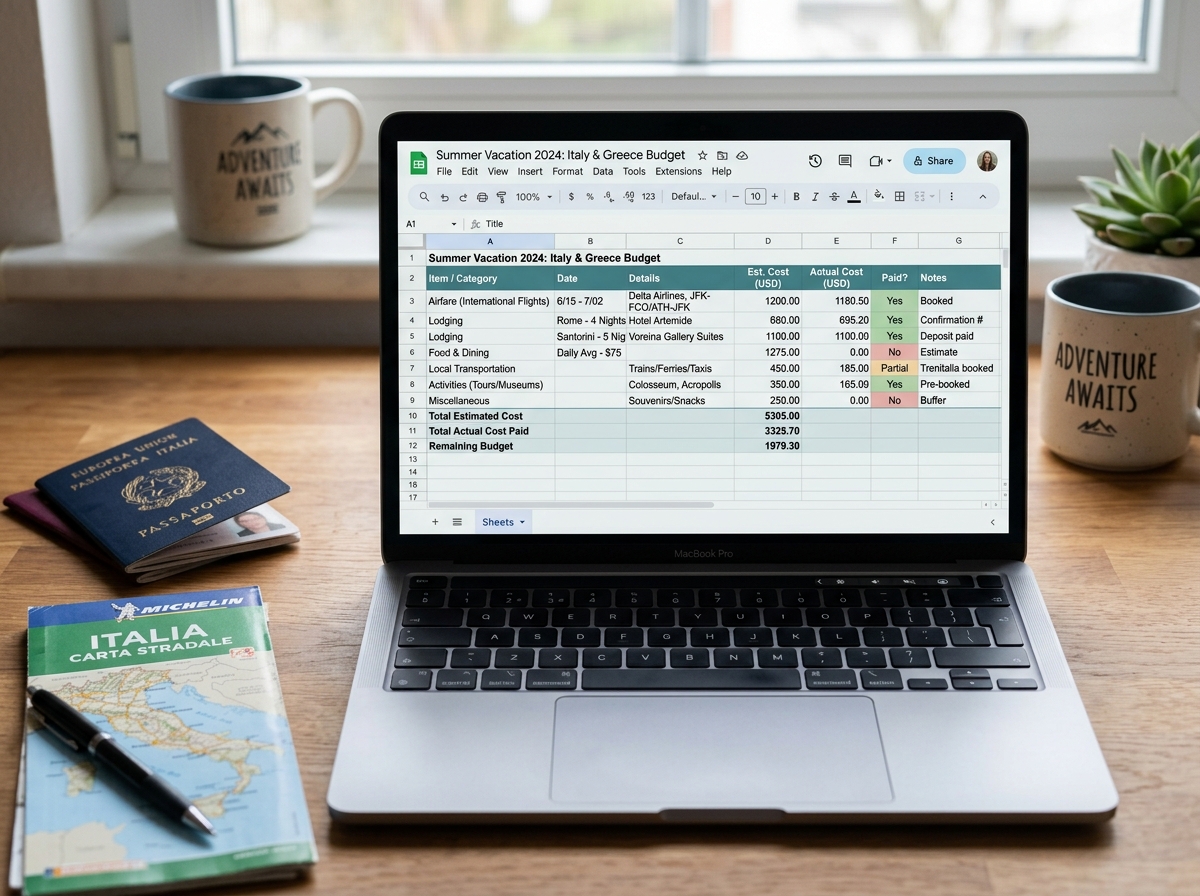
The biggest mistake we see travelers make is “guesstimating.” You think a trip to Bali will cost $2,000, but once you factor in travel insurance, airport transfers, and that impulsive paragliding session, you’re suddenly $1,000 in the hole. To build a successful plan for monthly savings for trips, you need a hard number.
Start by breaking your costs into these major categories:
- Airfare: Check current prices for your dates, then add $50 for baggage fees or seat selection.
- Accommodation: Look up the average nightly rate for your travel style (hostel vs. boutique hotel).
- Daily Food & Drink: Research the “cost of a meal” in your destination. In Southeast Asia, $25/day is plenty; in London, you might need $75.
- Local Transport: Include trains, buses, and the occasional Uber.
- Activities: List the “must-dos” like museum entries or guided tours.
- The 15% Buffer: This is your “oh no” fund. It covers price hikes, forgotten toiletries, or a missed bus.
Once you have this total, it’s time to look at your timeline. If you’re just starting out, check out Easy Ways to Save for Your Dream Vacation to get your mindset right. If this is your first time saving a large sum, our Saving for Large Expenditures: A Kick-Starter’s Guide can help you navigate the basics.
Determining Your Monthly Savings for Trips
Math doesn’t have to be scary. To find your magic number, use this formula: Total Trip Cost ÷ Months Until Departure = Your Monthly Goal.
If you’re planning a long-term budget backpacking trip, industry experts recommend planning for at least $1,500 per month of travel. For a shorter, one-week getaway, the math looks like this:
| Total Trip Goal | Timeline | Monthly Savings Required |
|---|---|---|
| $2,500 | 12 Months | $208 |
| $2,500 | 7 Months | $357 |
| $2,500 | 4 Months | $625 |
Seeing these numbers helps you decide if your goal is realistic. If $625 a month feels like a punch in the gut, you simply extend your timeline or choose a more affordable destination.
Proven Strategies for Building Your Monthly Savings for Trips
Now that you have your target, how do you actually find that money in your current budget? It starts with an “expense audit.” We recommend tracking every single cent you spend for 30 days. This reveals “phantom expenses”—those $10 subscriptions or $6 lattes that quietly erode your travel fund.
The goal is to separate Needs (rent, basic groceries, insurance) from Wants (new clothes, takeout, streaming services). To dive deeper into trimming the fat, read our guide on Easy Ways to Reduce Monthly Expenses. You can also find Creative Ways to Save Money at Home that don’t feel like total deprivation.
One of the easiest wins? Food. Packing a lunch and cooking at home regularly can save you approximately $200 a month. If you’re new to the kitchen, check out Save More on Groceries: A Novice’s Approach.
Cutting Major Costs with Transportation and Utilities
If you want to supercharge your monthly savings for trips, you have to look at the “Big Three”: Housing, Transportation, and Utilities.
- Transportation: Selling a car is a “whopper” of a savings tactic. Between gas, insurance, parking, and maintenance, owning a car costs the average American over $250 a month. If you live in a city with decent transit, swapping a car for a bike or a bus pass can fund a trip to Europe in a single year. Use this Trip Planner: Transportation Savings Calculator to see exactly how much you’d save.
- Utilities: It sounds small, but turning off the AC and using fans, or renegotiating your internet bill, can put an extra $20–$50 back in your pocket monthly.
- Automation: Don’t rely on your willpower. Set up Automatic Savings: Making Your Money Work for You so that your travel money is moved out of your checking account before you even have a chance to spend it.
Tracking Your Monthly Savings for Trips
You can’t manage what you don’t measure. Use Budgeting Apps for Beginners to see your progress in real-time. We also suggest keeping your travel fund in a High-Yield Savings Account (HYSA). With interest rates currently around 4-5% APY, your money will actually grow while it sits there.
For those who prefer a hands-on approach, Tracking Daily Spending Effectively with a simple spreadsheet can be incredibly eye-opening.
Accelerating Your Progress: Side Hustles and Fast Savings
Sometimes, cutting expenses isn’t enough. You might need to play “offense” by increasing your income. The gig economy has made this easier than ever.
- Freelancing: Can you write, design, or manage social media? Freelance copywriting can earn you thousands of extra dollars over a few months.
- Selling Unused Items: Look around your apartment. That old guitar or the designer shoes you never wear could be worth $400 on resale sites.
- Side Hustles: Whether it’s pet sitting or taking evening shifts, every dollar earned should go straight into the travel account.
For a breakdown of how to balance these efforts, see our Short-Term vs. Long-Term Savings Tips. If you’re working with a limited income, don’t lose heart—Budgeting on a Low Income is a skill you can master.
How to Save Money Quickly for Last-Minute Travel
Got an invitation to a destination wedding in three months? You need to save fast. This requires “The Sprint” mindset:
- No-Spend Days: Commit to three days a week where you spend $0 on anything non-essential.
- The Pantry Challenge: Stop buying groceries for a week and eat whatever is in the back of your cupboards.
- Cancel Everything: Temporarily pause Netflix, Spotify, and gym memberships.
These aggressive tactics aren’t sustainable forever, but for 90 days, they can help you find that extra $200–$400 a month. For more high-speed advice, read Personal Finance 101: Stress-Free Saving Tips.
Maximizing Value with Travel Rewards and Smart Planning
Saving money is only half the battle; the other half is making that money go further. Smart planning can reduce your total goal, meaning you need lower monthly savings for trips.
- Travel Rewards: Use credit card points for flights and hotels. Some travelers have funded 15+ nights of accommodation just through sign-up bonuses.
- Off-Season Travel: Visiting Europe in October instead of July can save you 20-40% on flights and hotels.
- Railcards: If you’re traveling in the UK or Europe, a Railcard can save you 1/3 off train fares. Check your potential savings here: Railcard Journey Savings.
Implementing Budget-Friendly Lifestyle Tips into your daily life ensures you have more leftover for the fun stuff.
Reducing Your Monthly Savings for Trips Goal
You can also look into “alternative” travel to slash your costs:
- House-sitting: Stay in beautiful homes for free in exchange for watching a pet.
- Couchsurfing: Meet locals and get a free place to crash.
- Work Exchanges: Trade a few hours of work for room and board.
By reducing your total cost from $2,500 to $1,500 through these methods, your monthly savings goal drops significantly. Start with an Easy Budget Planner for Beginners and work toward Creating a Sustainable Budget Plan that fits your new, travel-focused lifestyle.
Staying Motivated on Your Savings Journey
Saving is a marathon, not a sprint. It’s easy to get excited in week one, but by month four, when your friends are going out for expensive dinners, you might feel the “frugal fatigue.”
To stay on track:
- Visualize: Keep a photo of your destination as your phone background.
- The Thermometer: Use a “Travel Savings Thermometer” on your fridge. Color it in as you reach milestones (25%, 50%, 75%).
- Small Rewards: When you hit a milestone, treat yourself to something small—like a $5 fancy chocolate bar—to celebrate.
If you’re just starting, Making Your First Steps into the World of Savings will help you build that initial momentum. For a deeper look at the psychology of saving, check out Enter the World of Personal Savings: A Beginner’s Guide.
Frequently Asked Questions about Monthly Savings for Trips
How much should I save each month for a $2,500 vacation?
If you have a seven-month timeline, you need to save $357 per month. Financial experts generally recommend saving at least 20% of your total income each month. If your income is $3,000 post-tax, that’s $600 in total savings—meaning you could fund your trip and still have money left for your emergency fund!
What are the best tools to track my travel fund?
We recommend using a combination of a dedicated High-Yield Savings Account and a budgeting app. This keeps your travel money separate from your “rent money” so you aren’t tempted to spend it. Check out our list of Simple Tools for Budget Management for more ideas.
Can I afford to travel on a low income?
Absolutely. Even saving as little as $20 a month can enable vacations over a longer period. Micro-savings ($30 or $40 a month) accumulate significantly over 3-5 years, often totaling $1,200 or more—plenty for a memorable road trip or a week at an all-inclusive resort. The key is to start now. Learn Budgeting for Savings: Where to Begin to get the ball rolling.
Conclusion
At QuickFinHub, we believe that travel isn’t just for the wealthy—it’s for the disciplined. By setting a clear monthly savings for trips goal, you stop “wishing” you could go and start “planning” your departure.
Financial independence and the freedom to explore the world start with a single step: looking at your numbers and deciding that your dreams are worth the sacrifice. Whether you’re cutting out a car payment or just packing a peanut butter sandwich for lunch, every dollar brings you closer to that boarding gate.
Stop dreaming and start doing. Start your journey today and let us help you navigate the path to a fully funded adventure. Safe travels!
