
Your Young Adult First Lease: What to Know Before You Sign
Signing a young adult first lease is one of the biggest financial steps you’ll take in your early 20s.
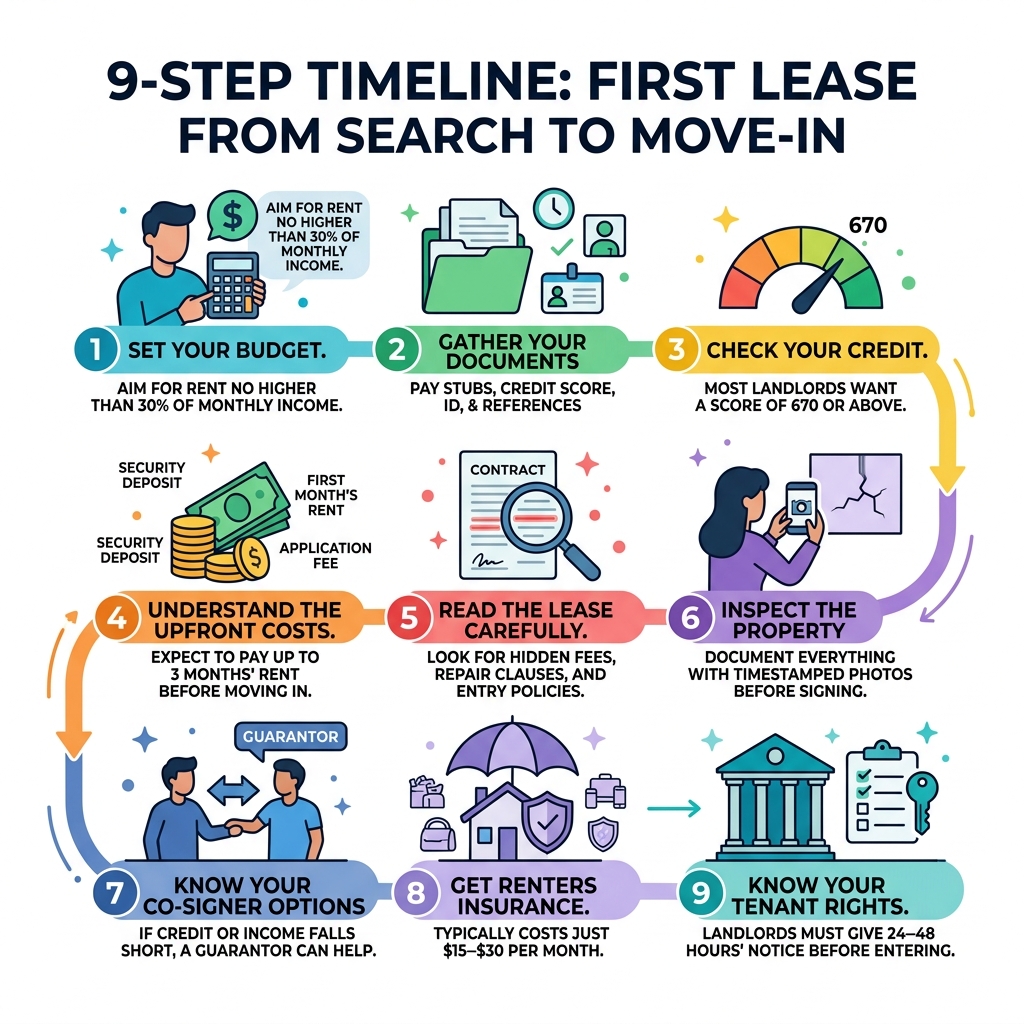
Here’s a quick overview of the key steps to navigate it successfully:
- Set your budget — aim for rent no higher than 30% of your monthly income
- Gather your documents — pay stubs, credit score, ID, and references
- Check your credit — most landlords want a score of 670 or above
- Understand the upfront costs — expect to pay up to 3 months’ rent before you move in
- Read the lease carefully — look for hidden fees, repair clauses, and entry policies
- Inspect the property — document everything with timestamped photos before signing
- Know your co-signer options — if your credit or income falls short, a guarantor can help
- Get renters insurance — it typically costs just $15–$30 per month
- Know your tenant rights — landlords must give 24–48 hours’ notice before entering
Renting your first place is exciting. It feels like freedom. But without the right prep, it can also hit your bank account hard and fast.
Between security deposits, application fees, hidden lease clauses, and the pressure to decide quickly in competitive markets, a lot can go wrong — especially when you’ve never done this before.
One renter caught their landlord trying to charge a full month’s rent despite moving in on the 20th of the month. Another found a clause that let the landlord keep the entire security deposit regardless of damages. These aren’t rare horror stories. They’re common pitfalls that catch first-time renters off guard.
The good news? Every single one of these traps is avoidable — if you know what to look for.
This guide walks you through everything: budgeting, applications, lease terms, move-in inspections, roommates, and your rights as a tenant. Whether you’re moving out for the first time or finally going it alone without a co-signer, this is the roadmap you need.
Determining Your Budget for a Young Adult First Lease
Before you even open a rental app, you need to know your “magic number.” We’ve all seen that dream apartment with the floor-to-ceiling windows, but if it costs 60% of your take-home pay, those windows will just give you a great view of your dwindling bank account.

The golden rule of thumb is the 30% rule: your total housing costs (rent plus utilities) should ideally not exceed 30% of your gross monthly income. For maximum financial peace of mind, many experts suggest aiming for 20% to 25%. This ensures you have enough left over for groceries, transport, and—let’s be real—the occasional night out. For more tailored advice, check out our personal-finance-budgeting-tips-for-young-adults.
Most landlords use a 3x income requirement. This means if the rent is $1,500, they want to see that you earn at least $4,500 a month before taxes. In hyper-competitive markets like New York City, this can jump to a staggering 40x the monthly rent. If you’re working with a tighter wallet, our guide on budgeting-on-a-low-income can help you find where to trim the fat.
Calculating Upfront vs. Ongoing Costs
One of the biggest shocks for a young adult first lease is the “Move-In Sticker Shock.” You aren’t just paying the first month’s rent; you are often paying for the privilege of moving in.
| Expense Type | Typical Cost | Frequency |
|---|---|---|
| Application Fee | $25 – $100 | One-time (per applicant) |
| Security Deposit | 1 Month’s Rent | One-time (Refundable) |
| First Month’s Rent | Varies | Monthly |
| Last Month’s Rent | Varies | One-time (Upfront) |
| Pet Deposit | $200 – $500 | One-time (per pet) |
| Pet Rent | $25 – $75 | Monthly |
In many cases, you’ll need to have three months’ worth of rent ready to go on day one (First, Last, and Security). If you have a furry friend, expect to pay a pet deposit and potentially monthly “pet rent.”
Hidden Expenses to Factor In
Rent is just the base price. To avoid “crying over the security deposit” later, you must account for the “invisible” bills:
- Utilities: Electricity, heating, and water. You can actually call the local utility company with the apartment’s address to get an estimate of what the previous tenants paid.
- Internet/Cable: Essential for work and Netflix, but often costs $60–$100+ monthly.
- Parking: In urban areas, a dedicated spot can cost an extra $100–$300 per month.
- Trash/Amenity Fees: Some “luxury” buildings charge for trash valet or gym access.
To keep these costs from spiraling, look into easy-ways-to-reduce-monthly-expenses like energy-saving habits or shared streaming plans.
Gathering Documentation and Navigating the Application
When you find a place you love, you have to move fast. Landlords in hot markets won’t wait for you to find a printer. You should have a “Rental Resume” folder ready to go.
Landlords typically require:
- Proof of Income: Your last 3 pay stubs or a formal offer letter if you’re starting a new job. Freelancers should have their last two years of tax returns ready.
- Credit Score: Most landlords look for a score of 670 or higher. If yours is lower, don’t panic—you might just need more documentation or a co-signer.
- Identification: A government-issued photo ID.
- References: Contact info for past landlords or professional mentors.
If you’re a student balancing books and bills, our simple-budgeting-tips-for-students can help you manage these initial application fees.
When You Need a Co-signer or Guarantor
If this is your young adult first lease, you might not have a long credit history or a high enough salary yet. This is where a co-signer (or guarantor) comes in. Usually a parent or guardian, this person signs the lease with you and agrees to pay the rent if you can’t.
Be aware: This is a huge legal responsibility for them. If you miss a payment, their credit takes a hit too. If you don’t have someone to ask, there are guarantor services that will act as your “backer” for a fee—usually 4% to 10% of the annual rent.
Essential Clauses in a Young Adult First Lease
Before you sign, use a First-Time Renter Checklist: What to Know Before You Sign a Lease | RentalSource to ensure you aren’t missing the fine print. Key clauses include:
- Maintenance: Who fixes the leaky faucet? Usually, the landlord is responsible unless you caused the damage through “gross negligence” (like trying to deep-fry a turkey in the living room).
- Guest Policy: Some leases limit how long a guest can stay before they are considered an “unauthorized occupant.”
- Late Fees: Check the “grace period.” A 10% late fee is considered high; make sure you know exactly when rent is considered “late.”
Decoding the Lease Agreement and Spotting Red Flags
A lease is a legally binding contract. Once you sign, you are on the hook for thousands of dollars over the next year. Never, ever rely on a “verbal promise.” If the landlord says they will paint the bedroom blue before you move in, get it in writing in the lease.
Protecting Your Assets During Your Young Adult First Lease
Many landlords now require renters insurance, and honestly, you should want it anyway. For about the price of two lattes a month ($15–$30), it covers your belongings if there’s a fire, theft, or even if a pipe bursts and ruins your laptop.
It also provides liability coverage. If someone trips in your apartment and sues you, the insurance helps cover the legal costs. It’s a small price to pay for massive peace of mind. While you’re thinking about long-term protection, it’s never too early to look into creating-a-family-budget-plan for your future household.
Common Lease Red Flags to Watch For
Keep your eyes peeled for these “deal-breakers”:
- Non-refundable Security Deposits: In many states, security deposits must be refundable by law. If the lease says it’s non-refundable, that’s a major red flag.
- Illegal Entry Rights: Landlords generally must give 24–48 hours’ notice before entering your home. If the lease says they can pop in whenever they want, don’t sign.
- Automatic Lease Renewal: Some leases automatically renew for another year if you don’t give notice 60 days in advance. Mark your calendar!
- No Subletting Allowed: If you might need to move for work or a breakup, not being able to sublet can trap you in a very expensive situation.
For more tips on living well without overspending, check out our budget-friendly-lifestyle-tips.
The Move-In Strategy: Inspections and Roommates
The day you get your keys is the most important day for protecting your security deposit.
Conducting a Thorough Property Walkthrough
Before you move a single box in, do a “white glove” inspection.
- Document Everything: Take high-resolution, timestamped photos and videos of every room, ceiling, floor, and inside every cabinet.
- Test the Basics: Flush the toilets, turn on every faucet (check for hot water!), test every light switch, and plug a phone charger into every outlet to ensure they work.
- The “Damage Log”: Most landlords provide a move-in checklist. Note every scratch, dent, or stain. If they don’t provide one, email them your list and photos immediately so there is a digital paper trail.
Choosing and Living with Roommates
Roommates are the ultimate “hack” for a young adult first lease because they slash your bills in half (or more). However, living with your best friend from college can be different than being “friends” with them.
Before moving in, have the “Uncomfortable Conversation”:
- The Budget: How will utilities be split? Is one person taking the smaller room for less rent?
- The Lifestyle: What is the guest policy? Who does the dishes? What is the “quiet time” for work or sleep?
- The Lease: Are both names on the lease? If only your name is on it, you are 100% responsible for the full rent if they decide to leave.
If you save enough on rent by having roommates, you might even be able to afford a trip to one of the-best-budget-destinations-for-young-adults.
Understanding Your Tenant Rights and Landlord Obligations
You aren’t just a “renter”—you are a consumer with legal protections. While laws vary by state, some basics are almost universal.
Basic Tenant Protections Every Renter Should Know
- The Right to Habitability: Your landlord must provide a safe, livable home. This means working heat, water, and electricity, and a structure that is weather-proof and free of pests.
- The Right to Privacy: Your apartment is your castle. Except for emergencies (like a fire or a bursting pipe), your landlord cannot enter without notice.
- Security Deposit Returns: Most states have a strict timeline (usually 14 to 30 days) for when a landlord must return your deposit or provide an itemized list of deductions.
- Anti-Discrimination: Under the Fair Housing Act, landlords cannot refuse to rent to you based on race, religion, sex, national origin, familial status, or disability. This includes allowing service or emotional support animals, even in “no pet” buildings.
As you navigate these legal waters, financial literacy is your best defense. We recommend checking out investing-tips-for-young-adults to see how the money you save on your lease can grow over time.
Frequently Asked Questions about Your First Lease
How much income do I need to qualify for my first apartment?
Most landlords require your gross (pre-tax) monthly income to be at least three times the monthly rent. For example, if the rent is $1,200, you should earn $3,600 per month. If you don’t meet this, you may need a co-signer or a larger security deposit.
What is the difference between a security deposit and last month’s rent?
A security deposit is money held by the landlord to cover potential damages or unpaid bills; it is refundable if you leave the place in good condition. Last month’s rent is a pre-payment for your final month of living there; it is not a deposit and cannot be used to pay for damages.
Can I negotiate the terms of my lease or the monthly rent?
Yes! While large corporate complexes often have “set” prices, private landlords are often open to negotiation. If you are moving in during the “off-season” (winter), or if you can sign a longer lease (18 months instead of 12), you may be able to negotiate a lower monthly rate or a waived amenity fee.
Conclusion
At QuickFinHub, we know that signing a young adult first lease feels like a high-stakes game. But with a solid budget, a clear understanding of the “fine print,” and a camera full of move-in photos, you can step into your new home with confidence.
Independence is about more than just having your own keys—it’s about making smart financial moves that set you up for the future. By doing your homework now, you ensure that your first apartment is a launchpad for your dreams, not a drain on your bank account.
Happy house hunting!
