
Why Every Young Adult Needs an Expense Tracker Notebook
An expense tracker notebook is a simple paper-based tool you use to record your daily income and spending — so you always know where your money is going.
Quick answer: What is an expense tracker notebook used for?
- Record daily purchases and bills in one place
- Spot spending patterns and cut unnecessary costs
- Build a monthly budget and stick to it
- Track savings progress toward a goal
- Stay aware of your cash flow without needing an app
Picture this: you grab a coffee on the way to work, split an Uber with a friend, order lunch, and top up your phone. By evening, you know you spent something — but you have no idea exactly how much, or where most of it went. That feeling is incredibly common, especially when you’re newly managing your own money.
That’s exactly the problem an expense tracker notebook solves.
Writing down your spending — by hand, on paper — creates a clear, honest record of your financial life. No app subscriptions. No complicated setup. Just you, a pen, and a notebook that keeps you accountable.
And it works. The simple act of writing an expense down makes you more aware of it before you spend, not just after.
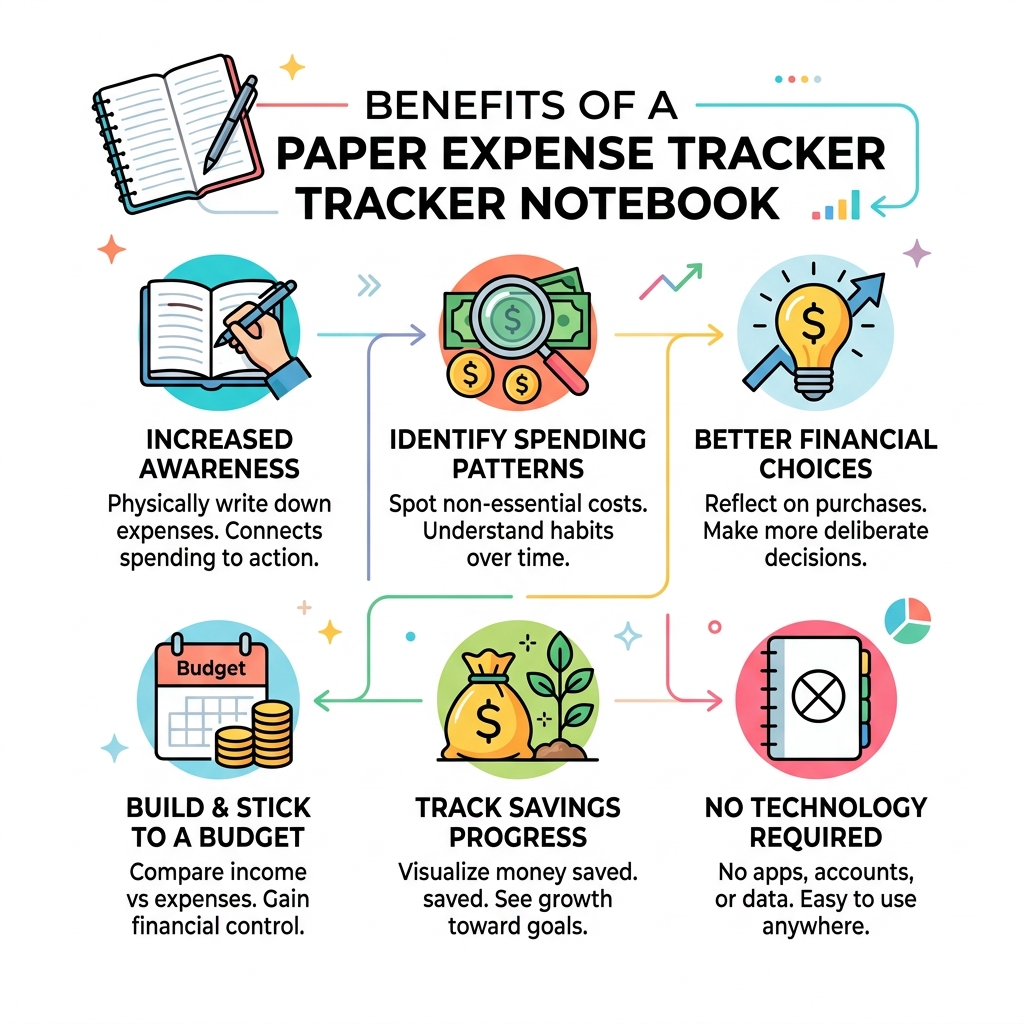
Why Use a Physical Expense Tracker Notebook?
In a world full of flashy apps and automated bank feeds, you might wonder why we still advocate for the humble paper expense tracker notebook. The truth is, there is a profound psychological impact when we physically put pen to paper.
When you use a notebook, you aren’t just logging data; you are engaging in a tactile experience that forces your brain to slow down and process each transaction. This leads to better tracking-daily-spending-effectively because you can’t just “swipe and forget.” Every dollar spent requires a moment of reflection.
Research into habit formation suggests that the physical act of writing reinforces memory and commitment. If you’re trying to build simple-tools-for-budget-management, a notebook is the ultimate “low-friction” entry point. There are no passwords to remember, no syncing errors to troubleshoot, and no distracting notifications.
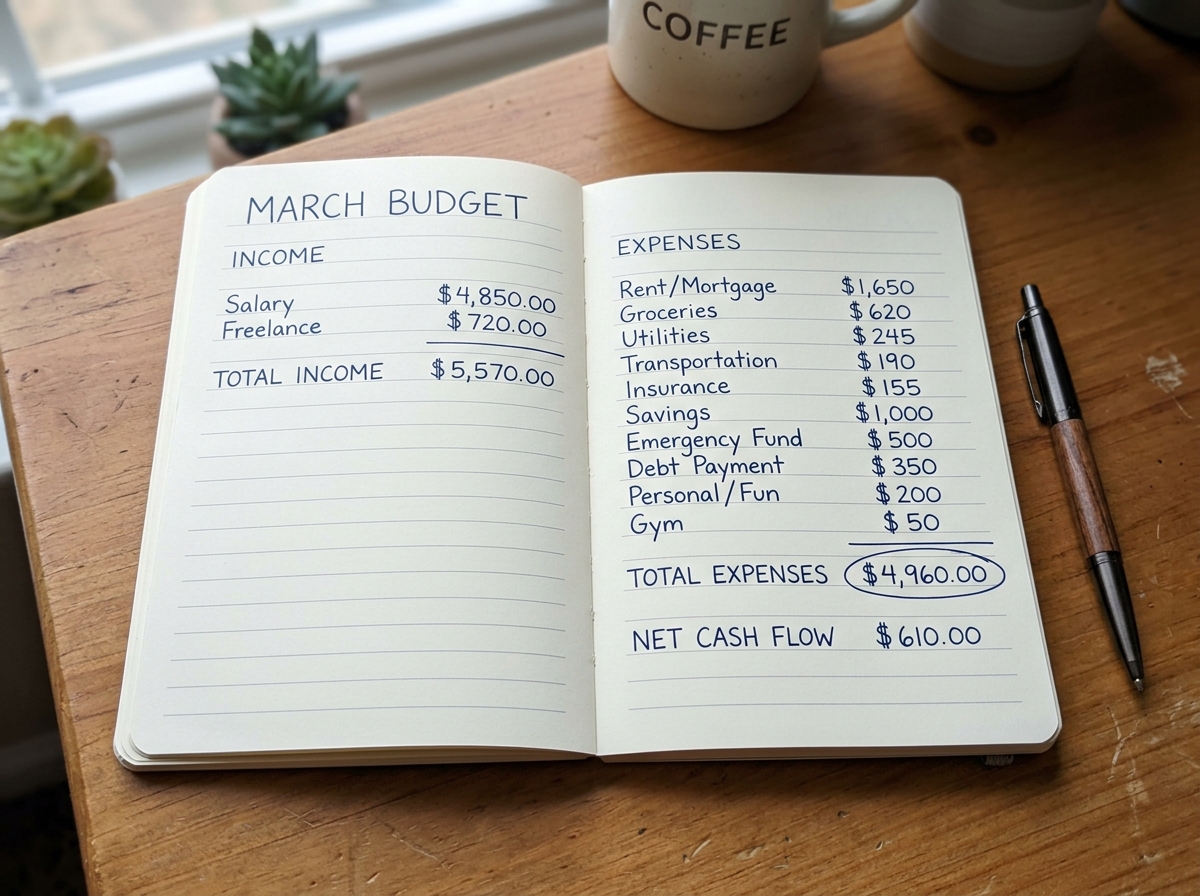
Furthermore, using a physical tracker fosters financial mindfulness. It’s much harder to ignore a growing list of “impulse buys” when they are staring back at you from a page. This awareness is the first step toward significant debt reduction and long-term financial health. For many young adults navigating life transitions, this analog method provides a sense of control that digital tools often lack.
Key Features to Look for in Your Expense Tracker Notebook
Not all notebooks are created equal. If you are going to carry this book with you and use it daily, it needs to be durable and functional. When we look at the market, several specifications stand out as “must-haves” for a quality expense tracker notebook.
- Paper Quality: Look for a high GSM (grams per square meter). Many top-rated planners, like the Clever Fox series, use 120gsm pearl white paper. This “no-bleed” quality ensures that your gel pens or markers won’t ruin the other side of the page.
- Size and Portability: You want something that fits in your bag but still offers enough room to write.
- A5 (5.8″ x 8.3″): The gold standard for balance between space and portability.
- B6 Slim or Pocket Size (3.5″ x 5.5″): Great if you want to keep your tracker in a jacket pocket for on-the-go logging.
- A4 (8.5″ x 11″): Better suited for small business owners who need to track high volumes of transactions at a desk.
- Cover and Binding: A vegan leather hardcover provides a premium feel and protects the pages from the chaos of a backpack. Spiral binding is excellent for laying the book flat, while stitched or stapled spines (common in Traveler’s Notebook inserts) are slimmer and lighter.
- Durability: Features like reinforced corners and elastic closures help the notebook survive a full year of use.
Knowing how-to-track-expenses-at-home starts with having a tool you actually enjoy using. If the paper feels scratchy or the book is too bulky, you’ll likely stop using it after a week.
Choosing the Right Layout for Your Expense Tracker Notebook
The layout is the heart of your financial organization. Depending on your goals, you might prefer different internal structures:
- Monthly Spreads: These give you a “bird’s-eye view” of your fixed bills and total income.
- Weekly Logs: Perfect for granular tracking of variable costs like groceries, dining out, and entertainment.
- Income & Expense Columns: A classic ledger style that helps you calculate your remaining balance in real-time.
- Savings Trackers: Visual “thermometers” or grids where you color in progress toward a vacation or emergency fund.
- Bill Checklists: Simple lists to ensure you never miss a credit card or utility payment.
If you are just starting out, an easy-budget-planner-for-beginners usually offers a mix of these layouts to help you find what works best for your brain.
Essential Add-ons for Financial Organization
To make your expense tracker notebook even more effective, look for these “quality of life” features:
- Pen Loops: Because a tracker is useless if you can’t find a pen.
- Back Pockets: Essential for holding loose receipts until you have time to log them.
- Cash Envelopes: Some planners come with 12+ envelopes for those using the “cash envelope system” to curb overspending.
- Ribbon Bookmarks: Help you flip instantly to the current day or week.
- User Guides: Many high-end trackers include a manual with weekly-budgeting-tips-for-beginners to help you set realistic goals.
How to Start Tracking Your Daily Spending Effectively
Starting is simple, but staying consistent is where the magic happens. We recommend a “Daily Ritual” approach. Every evening, spend five minutes with your expense tracker notebook.
- Collect Your Receipts: Whether physical or digital, gather everything you spent that day.
- Categorize: Group your spending into “Fixed” (rent, insurance) and “Variable” (coffee, movies, groceries).
- Log the Numbers: Enter the date, the merchant, the category, and the amount.
- Calculate Cash Flow: Subtract your total daily spending from your starting balance to see what’s left for the month.
At the end of the month, it’s time to crunch-the-numbers-with-a-personal-monthly-budget-calculator. Review your annual summaries and create a simple “Profit and Loss” statement for yourself. Did you spend more than you earned? If so, your notebook will tell you exactly which category (looking at you, Uber Eats) needs a trim.
Setting Up Your Expense Tracker Notebook for Success
To maximize your success, consider these setup tips:
- Go Undated: Many of the best notebooks are undated. This means if you miss a week or start in the middle of July, you don’t waste any pages.
- Custom Categories: Don’t feel restricted by pre-printed headers. Use Wite-Out or stickers to create categories that fit your life, like “Student Loan” or “Hobby Supplies.”
- Color Coding: Use different colored pens for income (green) and expenses (red) to make the data pop.
- Digital Backup: Some users like to use a sofiabaezzato/simple-expense-tracker style digital sheet as a month-end backup for their physical logs.
Analog vs. Digital: Finding Your Perfect Financial Tool
While we love the expense tracker notebook, we recognize that we live in a digital age. Some people prefer a “hybrid” approach. Here is how physical notebooks stack up against modern digital solutions:
| Feature | Physical Notebook | Digital App / AI Tool |
|---|---|---|
| Setup Time | Instant | Requires syncing/linking |
| Privacy | High (No data leaks) | Depends on encryption |
| Categorization | Manual (High awareness) | Automatic (AI-powered) |
| Accessibility | No battery required | Requires phone/internet |
| Analysis | Manual math | Instant charts/graphs |
For those who love tech, tools like expensetracker.io allow you to log spending via WhatsApp, while open-source projects like debjit003/SmartExpenseTracker or spritan/expense_tracker offer AI-driven receipt parsing. You can even learn How to Build a Smart Expense Tracker with Python and LLMs if you want a custom digital solution.
However, many young adults find that budgeting-apps-for-beginners can lead to “screen fatigue.” The notebook remains the best tool for those who want to disconnect and truly focus on their financial habits without the distraction of notifications.
Frequently Asked Questions about Expense Tracking
How long does a typical expense tracker last?
Most standalone expense tracker notebooks are designed to cover 12 months. However, Traveler’s Notebook inserts often contain fewer pages (around 38 pages) and might only cover a few months of heavy daily logging. Undated versions are the most flexible, as they last exactly as long as you need them to.
What is the average price range for a quality tracker?
You can find budget-friendly options starting around $7 to $10, such as simple ledger books or notebook inserts. Premium planners with vegan leather covers, high-quality 120gsm paper, and additional features like cash envelopes typically range from $19 to $27.
Are there eco-friendly options for paper-based tracking?
Yes! Many brands now focus on sustainability. Look for notebooks with FSC (Forest Stewardship Council) certification, which ensures the paper is sourced from responsibly managed forests. Some brands also use soy-based inks and recycled materials for their covers.
Conclusion
At QuickFinHub, we believe that mastering your money doesn’t have to be complicated. Whether you are navigating your first job, managing student loans, or saving for your first home, the expense tracker notebook is a reliable companion for your journey toward financial independence.
By choosing a tool that fits your style—be it a sleek Clever Fox planner or a minimalist Traveler’s insert—you are taking a proactive step toward a more secure future. The best system is the one you will actually use. Start small, be consistent, and watch how a few minutes of writing each day can transform your relationship with money.
Master your budget today and take the first step toward the life you want to build.
